
The atmosphere inside the Milano Ice Skating Arena is nothing short of electric. It is Thursday, February 19, 2026, a day that figure skating fans around the globe have been circling on their calendars for four long years. Today, the medals for the highly anticipated women’s figure skating olympics 2026 competition will finally be awarded.
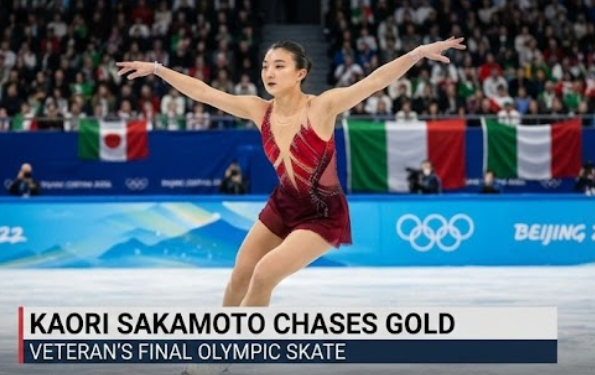
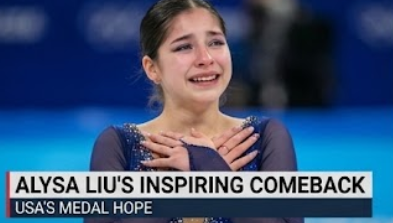
The storylines converging on the ice in Milan are as dramatic, beautiful, and heart-wrenching as a perfectly choreographed routine. We have a dazzling 17-year-old Japanese prodigy who has shocked the world by taking the lead. We have a 25-year-old reigning Queen of the ice, skating her final Olympic program before retirement. And we have a brilliant American star who walked away from the sport at the tender age of 16, only to return on her own terms and fight for the ultimate prize.
This comprehensive, in-depth guide covers absolutely everything you need to know about today’s 2026 winter olympics women’s single skating free skating event. From an analysis of the short program and detailed skater biographies to a breakdown of the judging system and the official schedule, here is your front-row seat to the most exciting event of the Winter Games.
Setting the Stage: The Winter Olympics Medals and the Team Event
Before delving into the individual women’s competition, it is crucial to understand the momentum that these athletes have brought into this week. The winter olympics medals in figure skating actually began flowing earlier in the Games with the highly competitive Team Event, which concluded on February 8.
The Team Event served as a high-pressure dress rehearsal for the individual events. The United States claimed the coveted team gold medal with a dominant 69 points. The American squad featured phenomenal performances from Ilia Malinin (known as the “Quad God”), Amber Glenn, Madison Chock, Evan Bates, and the reigning women’s World Champion, Alysa Liu.
Team Japan secured the silver medal, propelled by the ever-reliable Kaori Sakamoto, alongside Yuma Kagiyama, Shun Sato, and the history-making pairs team of Riku Miura and Ryuichi Kihara (who also won the individual pairs gold). Italy delighted the home crowd in Milan by capturing the bronze medal.
For the women competing in the individual event, the team competition was a crucial test of the ice conditions and the nerves required to perform in the Milano Ice Skating Arena. Alysa Liu and Kaori Sakamoto both proved they were in spectacular form, setting the stage for a titanic clash in the figure skating women’s singles 2026 event.
The Short Program Recap: A Night of Shock and Awe
To understand the immense pressure riding on today’s women free skating 2026 final, we must look back at the Short Program, which took place on Tuesday, February 17. What unfolded was one of the highest-quality, most nail-biting short programs in Olympic history.
Going into the event, the focus was heavily on the American trio and the veteran Japanese skaters. However, the night belonged to a teenager.
The Rise of Ami Nakai
Seventeen-year-old Ami Nakai arrived in Milan as somewhat of a dark horse compared to her highly decorated competitors. Due to the International Skating Union’s new raised minimum age rule, Nakai is one of the youngest skaters in contention at these Games. Just one year ago, she finished a modest 15th at the Japanese National Championships.
But on Tuesday night, skating to Nino Rota’s La Strada, Nakai was undeniable. She opened her program with a flawless, breathtaking Triple Axel—a jump that requires three-and-a-half rotations in the air and is notoriously difficult for female skaters to land cleanly. The five-point base value boost she received from executing the Triple Axel over a standard Double Axel was the key to her success. She followed it up with a crisp triple Lutz-triple toe loop combination and a clean triple loop.
When the music stopped, Nakai pumped her fists in pure joy. The judges rewarded her with a massive, personal-best score of 78.71 points (45.02 for technical elements and 33.69 for program components). “I feel like I’m dreaming,” Nakai said afterward. “I’m so happy I nailed the triple Axel on this amazing stage”.
The Veteran and the Comeback Queen
Sitting in second place is Japan’s Kaori Sakamoto, the 2022 Olympic bronze medalist and three-time reigning World Champion (2022, 2023, 2024). Sakamoto skated a deeply emotional and powerful routine to Time to Say Goodbye. Despite her lack of a Triple Axel, her immense speed, ice coverage, and silky-smooth skating skills earned her a massive Program Component Score (37.15). She executed a triple Lutz, a double Axel, and a triple flip-triple toe loop combination, finishing with a score of 77.23 points.
Hot on Sakamoto’s heels in third place is the pride of Team USA, Alysa Liu. The 20-year-old American skated cleanly to Promise by Laufey, receiving a minor quarter-rotation deduction on the second jump of her triple Lutz-triple loop combination. She posted a personal-best score of 76.59 points.
The margins are razor-thin. Only 2.12 points separate the top three women—Nakai, Sakamoto, and Liu. This sets up a terrifyingly close battle for the women’s singles figure skating olympics 2026 crown.
Deep Dive: The Top Contenders for Olympic Gold
As we look toward the women’s free skate olympics 2026, let us take a closer look at the extraordinary women fighting for their place in the history books.
1. Ami Nakai (Japan) – The Fearless Phenom
- Current Placement: 1st (78.71 points)
- The Narrative: Nakai represents the future of Japanese figure skating. Her meteoric rise over the past year includes a silver medal at the 2026 Four Continents, silver at the Grand Prix Final, and a win at the Grand Prix de France.
- The Free Skate Strategy: Nakai’s greatest weapon is her technical daring. While other skaters rely on artistry to build their scores, Nakai attacks the ice with high-value jumps. If she can land another Triple Axel in the four-minute free skate, the mathematical advantage she gains will be incredibly difficult for anyone else to overcome. The pressure of leading an Olympic event is immense for a 17-year-old, but Nakai has shown nothing but ice-in-her-veins composure so far.
2. Kaori Sakamoto (Japan) – The Retiring Queen
- Current Placement: 2nd (77.23 points)
- The Narrative: At 25 years old, Kaori Sakamoto is an absolute legend of the sport. She is competing in her third Olympics, having skated in PyeongChang 2018 and Beijing 2022. She has publicly announced that this will be her final competitive season, meaning today’s free skate will likely be her last Olympic performance.
- The Free Skate Strategy: Sakamoto does not possess the ultra-difficult Triple Axel. However, what she lacks in rotational difficulty, she makes up for with unparalleled quality. Her jumps are massive, soaring across the rink with incredible distance and speed, earning her the highest Grades of Execution (GOE) from the judges. Her Program Component Scores are virtually unbeatable. To win gold, she needs to skate a completely clean program and hope the pressure gets to Nakai.
3. Alysa Liu (United States) – The Master of Her Own Destiny
- Current Placement: 3rd (76.59 points)
- The Narrative: Alysa Liu’s story is one of the most compelling in all of sports. She was a child prodigy, bearing the weight of American figure skating expectations. After competing in the 2022 Beijing Olympics and winning a World Championship medal, she shockingly announced her retirement from the sport at just 16 years old. She stepped away from the toxic pressure cooker, lived a normal teenage life, and then chose to return to the ice in 2024 on her own terms. She crowned her comeback by winning the surprise World Title in March 2025.
- The Free Skate Strategy: Liu, now 20, is skating with a visible joy and maturity that was absent during her teenage years. “It’s indescribable,” she said of the difference between these Olympics and her experience four years ago. She is just 2.12 points behind Nakai. If Liu delivers a clean free skate, bringing both her technical elements and her refined artistry to the table, she could easily snatch the gold medal and complete the greatest comeback in Olympic figure skating history.
4. The Chasers and Dark Horses
While the top three have a distinct advantage, the Olympic ice is notoriously slippery. Several incredible athletes are waiting in the wings to capitalize on any mistakes:
- Mone Chiba (Japan): Sitting in fourth place with a brilliant 74.00 points, Chiba gives Japan a very real chance at sweeping the Olympic podium—a historic feat.
- Adeliia Petrosian (Individual Neutral Athlete): Currently in fifth place with 72.89 points, the three-time Russian national champion is the ultimate “X-factor” in this competition. Competing as a neutral athlete due to the sanctions against Russia following the 2022 invasion of Ukraine, Petrosian is known for attempting quadruple jumps. If she lands her high-risk quads in the free skate, she could rapidly climb the standings.
The Heartbreak of Amber Glenn
Not every Olympic story has a fairy-tale ending. Team USA entered the competition with high hopes for the 2024 Grand Prix Final champion, Amber Glenn. Unfortunately, the stringent scoring rules of figure skating proved punishing. During her short program, Glenn attempted a triple loop but “popped” it in the air, failing to complete the required three revolutions. Because she did not fulfill the jump requirement, she received absolute zero points for the element. The devastating mistake dropped the reigning U.S. champion down to 13th place (67.39 points), effectively ending her hopes for an individual medal, though she will still leave Milan as a Team Event gold medalist.Stay tuned for more live updates on the Women’s Figure Skating Olympics 2026
Understanding the Free Skate: Technicalities and Artistry
For those tuning into the 2026 winter olympics women’s single skating free skating event for the first time, it is helpful to understand how the event works and how it differs from the short program.

The Free Skate (often called the “long program”) is the ultimate test of an athlete’s physical stamina, mental fortitude, and artistic expression. While the short program lasts roughly 2 minutes and 40 seconds, the women’s free skate is a grueling 4 minutes long.
The Two Scores
Every skater’s final mark is a combination of two distinct scores:
- Technical Element Score (TES): This rewards the difficulty and execution of jumps, spins, and step sequences. Every element has a base value. Judges then award a Grade of Execution (GOE) from -5 to +5 based on how beautifully the element was performed. This is where Ami Nakai thrives with her Triple Axel.
- Program Component Score (PCS): Often thought of as the “artistic” score, this evaluates the skater’s composition, presentation, and skating skills (edges, flow, speed). This is the domain of Kaori Sakamoto, whose maturity on the ice commands high marks.
The Evolution of the Sport
The 2026 Milan event highlights a fascinating evolution in women’s figure skating. During the 2022 Beijing Olympics, the narrative was dominated by young Russian skaters executing multiple quadruple jumps. However, with the ISU’s new age limit requiring skaters to be older to compete as seniors, the sport has seen a slight shift away from the brutal, injury-inducing quadruple jump rat-race, moving back toward a more balanced blend of high-quality triple jumps, pristine skating skills, and emotional maturity.Stay tuned for more live updates on the Women’s Figure Skating Olympics 2026
Women’s Single Figure Skating Olympics Schedule
If you are eager to witness history being made, you need to know exactly when to tune in. The women’s single figure skating olympics schedule reaches its grand climax today.
- Event: Women’s Singles – Free Skating
- Date: Thursday, February 19, 2026
- Venue: Milano Ice Skating Arena (Forum di Milano), Milan, Italy
- Start Time: 19:00 Local Time (CET)
- Note for US Viewers: This translates to 1:00 PM Eastern Time (ET) / 10:00 AM Pacific Time (PT).
The starting order for the Free Skate is determined by the results of the Short Program, skated in reverse order. This means the lowest-scoring skaters will take the ice first, building up to the final, tension-filled group of the night.
The final group will feature the top six skaters from Tuesday. Alysa Liu, Kaori Sakamoto, and Ami Nakai will be the very last three women to skate, in that exact order. By the time Nakai strikes her opening pose, she will know exactly what score she needs to win Olympic gold.
The Venue: The Cauldron of the Milano Ice Skating Arena
The drama will unfold at the Milano Ice Skating Arena. Italian fans are renowned for their passionate support, but for this event, expect the arena to be transformed into a sea of Japanese flags and American stars and stripes.
Olympic ice is notoriously unforgiving. The glare of the global spotlight, the knowledge that billions of people are watching, and the realization that a lifetime of training boils down to four minutes can cause even the most seasoned veterans to falter. The ice is cold, hard, and unbiased. It does not care about past world titles or Cinderella comeback stories. Today, the only thing that matters is who can stay on their feet and deliver perfection when the music starts. Stay tuned for more live updates on the Women’s Figure Skating Olympics 2026
Conclusion: A Legacy on the Line
The figure skating women’s singles 2026 competition is destined to be remembered as one of the greatest battles in the history of the Winter Games.
Will the dazzling 17-year-old Ami Nakai hold her nerve, land her Triple Axel, and become the first Japanese woman to win Olympic singles gold since Shizuka Arakawa did it exactly twenty years ago at the 2006 Torino Games in Italy?
Will the retiring legend Kaori Sakamoto ride her spectacular skating skills to a final, golden farewell?
Or will Alysa Liu complete a script worthy of Hollywood, proving that stepping away for your mental health and returning to the sport on your own terms is the ultimate path to Olympic glory?
The women free skating 2026 finale is not just a sporting event; it is a masterclass in human resilience, artistic beauty, and sheer, breathtaking athletic courage. Settle in, hold your breath, and watch as the ice in Milan crowns its new Olympic Champion.
Stay tuned for more live updates on the Women’s Figure Skating Olympics 2026.