
“Banaras is older than history, older than tradition, older even than legend, and looks twice as old as all of them put together.”
This famous quote by Mark Twain perfectly captures the essence of Varanasi. It’s a city that doesn’t just exist; it pulsates with an energy that feels as old as time itself. Located on the banks of the holy river Ganga in Uttar Pradesh, Varanasi is one of the oldest continuously inhabited cities in the world, renowned globally as Kashi Vishwanath and the City of Light, its sacred name that speaks of spiritual illumination..
For a Hindu, Varanasi is the ultimate pilgrimage destination. It is the city where Lord Shiva is believed to reside, and where dying guarantees moksha (salvation)—freedom from the endless cycle of birth and death. In this comprehensive guide, we will journey through the winding lanes of this mystical city, focusing on its beating heart: the Kashi Vishwanath Temple, and exploring why it truly deserves the title “The City of Light.”
Understanding Kashi Vishwanath and the City of Light: The Spiritual Illumination of Varanasi
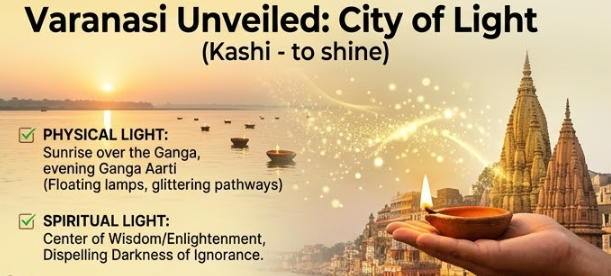
Before diving into the specifics of the temple, it is essential to understand the city’s ancient name, Kashi. The word “Kashi” is derived from the Sanskrit root Kash, which means “to shine” or “to illuminate.” Thus, Kashi is “The Shining City” or “The City of Light.”
This light is not merely physical; it is spiritual. Varanasi is considered the center of spiritual enlightenment. It is the place where the light of wisdom dispels the darkness of ignorance. The city is believed to be the spot where the first ray of light fell when the universe was created.
When you stand on the ghats (steps leading to the river) at dawn or dusk, you witness a different kind of light. The sunrise over the Ganga is an ethereal experience, painting the sky in shades of gold and orange. The evening Ganga Aarti, with its hundreds of floating lamps, turns the river into a glittering pathway of light. This combination of spiritual enlightenment and physical illumination is what makes Varanasi “The City of Light.” This combination of spiritual enlightenment and physical illumination is what defines Kashi Vishwanath and the City of Light
Kashi Vishwanath Temple: The Soul of Varanasi
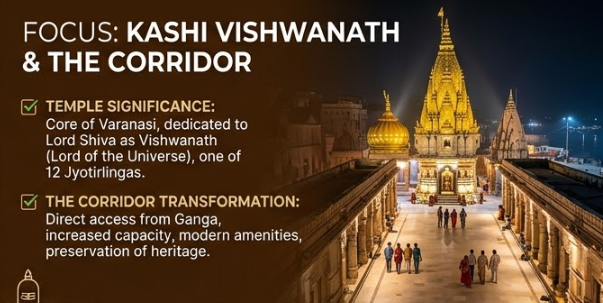
The Kashi Vishwanath Temple is the core around which the entire city of Varanasi revolves. Dedicated to Lord Shiva, who is worshipped here as Vishwanath (Lord of the Universe), it is one of the most sacred Hindu temples. centered on the temple, the entire city of Varanasi is often summed up in the powerful phrase Kashi Vishwanath and the City of Light
The Significance of the Temple
The Kashi Vishwanath Temple is one of the 12 Jyotirlingas—the most auspicious lingams (abstract representations) of Lord Shiva, believed to be self-manifested radiant pillars of light. A visit to Kashi and a darshan (glimpse) of the Vishwanath Lingam is considered one of the highest spiritual achievements for a Hindu. It is believed that a single visit to this temple is equivalent to the blessings received from visiting all other 11 Jyotirlingas.
A History of Resilience and Rebuilding
The history of the Kashi Vishwanath Temple is a story of incredible resilience. The original temple has been destroyed and rebuilt multiple times throughout history, following invasions and religious persecution.
- The earliest temple was destroyed by Qutb-ud-din Aibak in 1194 CE.
- It was rebuilt but destroyed again by various rulers over the centuries.
- The most significant destruction occurred in 1669 CE when the Mughal Emperor Aurangzeb demolished the temple and built the Gyanvapi Mosque in its place.
- The current temple structure was built in 1780 CE by the Maratha monarch, Ahilyabai Holkar of Indore. The two spires of the temple were later covered in gold, donated by Maharaja Ranjit Singh of the Sikh Empire in 1839.
This history of constant destruction and triumphant rebuilding symbolizes the enduring spirit of faith that defines Varanasi. The fact that the temple stands strong today, with its golden domes gleaming under the sun, is a testament to the unwavering devotion of millions.
The Modern Transformation: The Kashi Vishwanath Corridor
In recent years, the Kashi Vishwanath Temple has undergone its most significant transformation yet with the inauguration of the Kashi Vishwanath Corridor in December 2021. This massive project, spearheaded by Prime Minister Narendra Modi, aimed to ease the difficulties faced by pilgrims and connect the ancient temple directly to the holy river Ganga.
Why was the Corridor Needed?
For decades, accessing the Kashi Vishwanath Temple involved navigating incredibly narrow, congested, and often dirty lanes (gallis) of the old city. Pilgrims had to walk through crowded pathways, making the journey challenging, especially for the elderly and disabled. There was no direct visual or physical connection between the holy Ganga, where devotees take a ritual bath, and the temple, where they offer the holy water.
Features and Impact of the Corridor
The Kashi Vishwanath Corridor project changed everything. Spanning an area of nearly 5 lakh square feet (compared to the earlier 3,000 square feet), it created a wide, paved pathway connecting the Manikarnika, Jalasen, and Lalita Ghats directly to the temple complex.
Key features of the corridor include:
- Direct Access: Pilgrims can now take a holy dip in the Ganga and walk directly to the temple through a spacious and clean corridor.
- Increased Capacity: The corridor can now accommodate lakhs of devotees simultaneously, significantly reducing congestion and waiting times.
- Modern Amenities: The complex now includes pilgrim facilitation centers, a museum, a viewing gallery, a large mandapam (hall), and various other facilities, making the spiritual journey much more comfortable.
- Beautification and Preservation: While modernizing, the project also focused on preserving the heritage and aesthetic beauty of the ancient city.
The Kashi Vishwanath Corridor has not only made the pilgrimage easier but has also revived the grandeur of the temple, allowing its spiritual light to shine brighter than ever before. It seamlessly blends modern infrastructure with ancient traditions.
Experiencing Varanasi through the Ghats
The ghats of Varanasi are the steps leading down to the Ganga, and they are the soul of the city’s public life. There are over 84 ghats in Varanasi, each with its own unique history, significance, and atmosphere. Spending time on the ghats is essential to understanding the pulse of Varanasi.
Dashashwamedh Ghat and the Ganga Aarti
The most famous and liveliest ghat is Dashashwamedh Ghat. Located near the Kashi Vishwanath Temple, it is the beating heart of Varanasi. Legend says that Lord Brahma performed the Dasa-ashwamedha (ten-horse sacrifice) ritual here, giving the ghat its name.
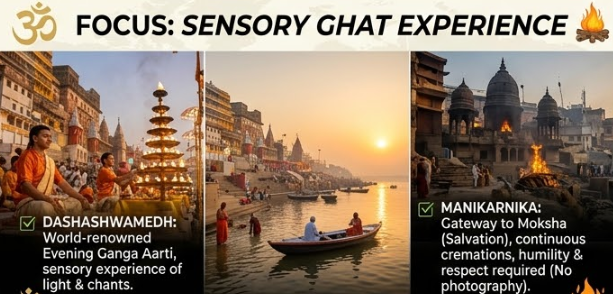
This is the main venue for the world-renowned evening Ganga Aarti. As dusk settles, the ghat transforms into a spiritual spectacle. Several young priests, dressed in traditional saffron robes, perform an elaborate ritual offering light to the holy river. With large, multi-tiered brass lamps, incense, bells, and chants, the Aarti is a sensory experience like no other. Hundreds of devotees gather on the steps and in boats on the river to witness this powerful display of faith. The reflection of the lamps on the water creates a mesmerizing tapestry of light, truly embodying the spirit of the “City of Light.”
Manikarnika Ghat: The Gate to Moksha
Varanasi is one of the few places in the world where death is not just accepted but celebrated as a gateway to salvation. Manikarnika Ghat is the primary “burning ghat,” where cremations take place 24 hours a day, seven days a week.
According to Hindu belief, dying in Kashi and being cremated at Manikarnika Ghat ensures moksha—liberation from the cycle of rebirth. While this may sound grim to outsiders, witnessing the cremations at Manikarnika Ghat is a deeply profound and humbling experience. It is a stark reminder of the impermanence of life and the eternal nature of the soul. The funeral pyres burn continuously, and the atmosphere is one of solemn acceptance of life’s final truth. Visitors are expected to show utmost respect and are strictly forbidden from taking photographs at this sacred site. Treating this sensitive aspect with reverence adds a crucial “human touch” to your experience of Varanasi.
Assi Ghat: A Calm Haven
Located at the confluence of the Ganga and Assi rivers, Assi Ghat offers a calmer, more relaxed atmosphere compared to Dashashwamedh Ghat. It is popular with long-term visitors, researchers, and students. Legend states that Goddess Durga, after killing the demons Shumba and Nishumba, threw her sword into the Assi river, hence the name.
Assi Ghat is famous for the morning Aarti, known as Subah-e-Banaras, which starts before sunrise. Witnessing the sun rise over the Ganga while the chants echo across the ghat is a peaceful and beautiful way to start your day in Varanasi. The ghat is also connected to the famous saint-poet Tulsidas, who is said to have written part of the Ramcharitmanas here.
Life on the Ganga: A Spiritual Journey
A boat ride on the Ganga at dawn is an quintessential Varanasi experience. As the first rays of the sun illuminate the ghats, the river comes alive with activity.
From the boat, you can witness the different facets of life on the ghats:
- Ritual Baths: Devotees performing their morning snan (holy bath), dipping themselves multiple times in the sacred water while chanting prayers.
- Daily Chores: People washing clothes, performing yoga, or simply meditating by the riverbank.
- Cremation Pyres: Gliding past Manikarnika and Harishchandra Ghats, you see the eternal fires of cremation, a powerful juxtaposition of life and death.
- Temple Spires: The majestic spires of various temples, including the golden domes of Kashi Vishwanath, gleaming in the morning light.
The boat ride offers a unique perspective on the city, allowing you to see the interconnectedness of spirituality, daily life, and the eternal cycle of the Ganga. It is a peaceful journey that leaves you with a deep sense of calm and perspective.
Beyond the Temple and Ghats: Exploring Banaras
While Kashi Vishwanath and the ghats are the main draws, Varanasi has much more to offer.
Sarnath: Where Buddha Preached His First Sermon
Located just 10 km from Varanasi, Sarnath is one of the four most important Buddhist pilgrimage sites in the world. It is the place where Lord Buddha, after attaining enlightenment in Bodh Gaya, preached his first sermon, known as the Dharmachakra Pravartana Sutta, to his five disciples.
Key sites to visit in Sarnath include:
- Dhamek Stupa: A massive, ancient stupa marking the spot where Buddha is believed to have preached.
- Ashoka Pillar: The ruins of the pillar erected by Emperor Ashoka, topped by the famous Lion Capital (which is now the national emblem of India).
- Sarnath Archaeological Museum: Houses a remarkable collection of Buddhist art and sculptures.
A visit to Sarnath provides a peaceful contrast to the chaotic energy of Varanasi and highlights the city’s significance in both Hindu and Buddhist traditions.
The Narrow Lanes (Gallis) of Banaras
To truly experience Varanasi, you must get lost in its labyrinth of narrow, winding lanes. These ancient alleys, barely wide enough for two people to pass, are bustling with life. Here, you will find tiny shops selling everything from exquisite Banarasi silk sarees to street food. Getting lost in these lanes is part of the charm, as every corner reveals something unexpected—a hidden temple, a traditional sweet shop, or a group of sadhus (holy men).
The Taste of Banaras: Street Food
Varanasi is a paradise for food lovers. The city’s street food is legendary, simple, and full of flavor. Some of the must-try items include:
- Kachori Sabzi: A popular breakfast item consisting of deep-fried kachoris served with a spicy potato curry.
- Lassi: Thick, creamy yogurt drink served in earthen pots (kulhads). The famous Blue Lassi shop is a must-visit.
- Banarasi Paan: The city’s iconic betel leaf preparation, famous throughout India. Trying a paan at the end of a meal is a true Banarasi tradition.
- Tamatar Chaat: A unique and delicious chaat made with tomatoes, spices, and a variety of toppings.
Exploring the lanes and indulging in the local food is an essential part of the Varanasi experience, adding a delicious “human touch” to your journey.
Banaras Hindu University (BHU)
Varanasi is also a major center of education, and Banaras Hindu University (BHU) is one of the premier universities in India. Established in 1916 by Pandit Madan Mohan Malaviya, the vast, green campus is a city within a city.
A key attraction on the BHU campus is the New Vishwanath Temple (Birla Temple). Built by the Birla family, this temple is dedicated to Lord Shiva and is a grander, more spacious version of the original Kashi Vishwanath Temple. Its towering 252-foot spire is one of the tallest in the world. The temple is open to people of all faiths, embodying the inclusive spirit of the university and the city.
The Human Touch: The Vibe of Varanasi
What truly makes Varanasi “The City of Light” is its intangible vibe—the unique blend of chaos and calm, the ancient and the modern, life and death, all existing side-by-side. It is a city that forces you to confront life’s fundamental truths while enveloping you in an overwhelming sense of devotion.
The people of Varanasi, with their warm hospitality and laid-back attitude (often referred to as ‘Banarasi Masti’), are an integral part of this vibe. The city has been a muse for countless artists, poets, musicians, and writers for centuries.
Varanasi is a place where you can find profound peace amidst the chaos. It’s a city that teaches you to let go, to accept, and to see the spiritual light that shines within everything. Sharing these intangible feelings and observations is what gives your experience of Varanasi that essential human touch.
Planning Your Pilgrimage: A Practical Guide
A trip to Varanasi requires some planning to ensure a smooth and meaningful experience.
Best Time to Visit
The best time to visit Varanasi is during the winter months, from October to March. The weather is pleasant, with cool days and chilly nights, making it ideal for exploring the ghats and the temple. Summers (April to June) can be extremely hot, and the monsoon season (July to September) can bring heavy rains and a rising river level.
How to Reach
- By Air: Lal Bahadur Shastri International Airport (VNS) is well-connected to major Indian cities like Delhi, Mumbai, Kolkata, and Bengaluru.
- By Train: Varanasi Junction (BSB) and Pandit Deen Dayal Upadhyaya Junction (MGS) are major railway stations connecting Varanasi to all parts of India.
- By Road: Varanasi is well-connected by road to nearby cities like Prayagraj, Lucknow, and Patna.
Essential Experiences
- Witness the Evening Ganga Aarti at Dashashwamedh Ghat. Arrive early (by 5:30 PM in winter, 6:30 PM in summer) to secure a good spot.
- Take a Dawn Boat Ride on the Ganga to witness the sunrise and daily rituals.
- Perform a Puja or offer prayers at the Kashi Vishwanath Temple. Note: Pre-booking ‘Sugam Darshan’ through the official website (shrikashivishwanath.org) can save time.
- Visit the Burning Ghat (Manikarnika Ghat), treating the space with utmost reverence and respect.
- Explore Sarnath to connect with Buddhist heritage.
- Get Lost in the Lanes of Banaras and try the local street food.
Important Tips
- Dress Modestly: As a place of high religious significance, dress respectfully, covering your shoulders and knees.
- Be Respectful at Burning Ghats: Absolutely no photography at Manikarnika or Harishchandra Ghats. Show solemnity and respect.
- Beware of Scams: Be cautious of overly friendly guides, fake sadhus, and inflated prices. It’s always best to book boat rides and other services through reliable sources or hotels.
- Stay Hydrated: Drink plenty of bottled water, especially during the warmer months.
- Embrace the Chaos: Varanasi is chaotic. Be prepared for crowds, noise, and dirt. Embracing the chaos is part of the experience.
Conclusion: The Enduring Light of Kashi Vishwanath and the City of Light”
Varanasi is not just a destination; it’s an experience that leaves an indelible mark on your soul. It’s the “City of Light” where the physical light of the Ganga Aarti meets the spiritual light of enlightenment. Kashi Vishwanath, with its history of resilience and its modern corridor, stands as a testament to the eternal power of faith. Whether you come seeking spiritual solace, historical knowledge, or simply to witness the unique spectacle of life and death, Varanasi offers a journey that is as profound as it is unforgettable. The light of Kashi has been shining for millennia, and it continues to guide countless seekers towards inner peace and understanding, truly embodying its ancient name as the eternal City of Light.