


If you close your eyes and picture the quintessential image of royal India, what do you see? You likely imagine vast deserts, kings adorned in jewels, elephants walking up cobblestone paths, and magnificent palaces glowing under the setting sun. This is not just a fantasy; this is a very real place. When planning a trip to northern India, the ultimate destination that captures this royal imagination is undoubtedly Jaipur, Rajasthan: The Pink City & Rajput forts that stand proudly as guardians of its legendary history.
Whether you are an architecture enthusiast, a lover of vibrant street photography, a history buff, or a traveler looking to taste some of the richest culinary traditions in South Asia, Jaipur offers an experience unlike any other. However, navigating a city with such overwhelming historical weight can be daunting.
In this comprehensive guide, we will walk you through the vibrant, chaotic, and breathtakingly beautiful streets of the state capital. We will explore exactly why it earned its colorful nickname, dive deep into the architectural marvels of the towering fortresses, and provide you with actionable travel tips to make your journey unforgettable.
1. The Colorful History: Why is it Called the Pink City?
Before we explore the monuments, we must understand the canvas they are painted on. When you travel to Jaipur, Rajasthan: The Pink City & Rajput forts are the two elements that immediately dominate your senses. But why pink?
The city was founded in 1727 by the visionary Maharaja Sawai Jai Singh II. Unlike older cities that grew organically and chaotically, Jaipur was meticulously planned. It is considered India’s first modern planned city, designed according to the principles of Vastu Shastra (the traditional Hindu system of architecture). The streets were designed in a grid system, intersecting at right angles, which was revolutionary for its time.
However, the iconic color came later. In 1876, the Prince of Wales (who would later become King Edward VII) embarked on a grand tour of India. To welcome the British royal, the ruler of Jaipur at the time, Maharaja Sawai Ram Singh, ordered the entire old city to be painted in a terracotta pink hue. In Rajput culture, pink is the color of hospitality and welcome.
The Prince was so enchanted by the gesture that he dubbed it the “Pink City.” The color became so beloved that the Maharaja’s wife convinced him to pass a law making it illegal for buildings in the old city to be painted any other color. Incredibly, that law remains in effect today, preserving the historic charm of the walled city.
2. Exploring Jaipur, Rajasthan: The Pink City & Rajput Forts

The heart and soul of Jaipur’s tourism lie in its military architecture. The rulers of this region, the Rajputs, were fiercely proud warrior clans. Their primary defense systems were the massive fortresses built on the rugged Aravalli Hills surrounding the city.
A thorough exploration of Jaipur, Rajasthan: The Pink City & Rajput forts must include the “Golden Triangle” of local fortifications: Amer, Jaigarh, and Nahargarh.
Amer Fort (Amber Fort): The Crown Jewel
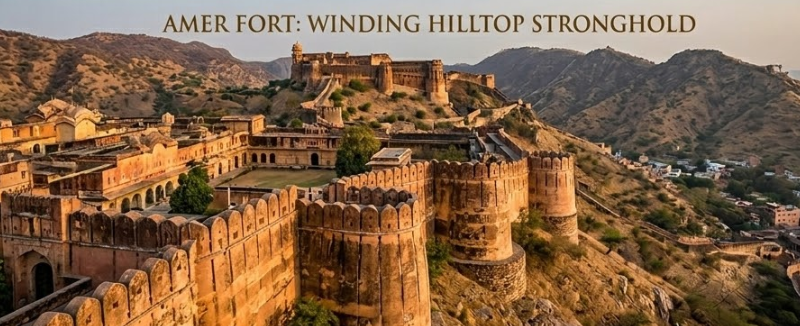
Located about 11 kilometers from the city center, Amer Fort is a UNESCO World Heritage site and arguably the most stunning fortress-palace in India. Built primarily from pale yellow and pink sandstone, alongside white marble, it perfectly reflects the grandeur of the Rajput era.
- The Ascent: Traditionally, visitors would ride painted elephants up the steep, winding path to the main gate (Suraj Pol). Today, for ethical reasons, many travelers choose to walk the scenic path or take a jeep, which allows you to appreciate the sheer scale of the outer walls.
- Sheesh Mahal (The Mirror Palace): This is the undisputed highlight of Amer Fort. The walls and ceilings of this pavilion are embedded with thousands of tiny, convex mirrors. Legend has it that the queen loved to sleep under the stars, but ancient customs forbade women from sleeping in the open air. So, the king built the Sheesh Mahal, where a single candle lit at night reflects across the glass, creating an artificial, breathtaking starry sky.
- Diwan-i-Aam (Hall of Public Audience): A magnificent pavilion featuring rows of beautifully carved pillars, blending Hindu and Mughal architectural styles seamlessly.
Jaigarh Fort: The Fort of Victory
While Amer Fort is known for its elegant palaces, Jaigarh Fort, located higher up on the same hill of eagles (Cheel ka Teela), was purely a military stronghold. It was designed to protect the royal family residing down in Amer.
- The Rugged Beauty: You will notice a distinct lack of delicate marble here. Jaigarh is made of thick, unyielding red sandstone. It features massive battlements, watchtowers, and a labyrinth of subterranean passages.
- The Jaivana Cannon: The primary reason tourists flock to Jaigarh is to see the Jaivana. At the time of its manufacture in 1720, it was the world’s largest cannon on wheels. It is so massive that it was only fired once—as a test—and the sheer force of the recoil allegedly created a small lake where the cannonball landed miles away.
Nahargarh Fort: The Tiger Fort
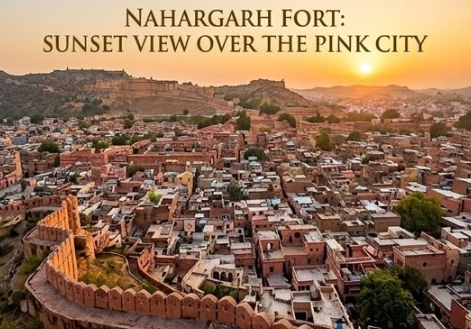
Perched on the edge of the Aravalli Hills, Nahargarh Fort once formed a strong defense ring for the city. Today, it serves a much more peaceful purpose.
- The Sunset View: Nahargarh is famous for offering the most spectacular panoramic views of Jaipur. As the sun begins to set, the entire city glows in a soft, dusty pink. It is a favorite spot for young locals, photographers, and travelers looking to escape the bustling city below.
- The Legend: Local lore says the fort’s construction was repeatedly hindered by the spirit of a Rathore prince named Nahar Singh Bhomia. Every morning, the walls built the previous day would be found mysteriously destroyed. To appease the spirit, a temple was built in his honor within the fort, and the stronghold was named after him.

3. Beyond the Defenses: The Royal Palaces
While the military history defines Jaipur, Rajasthan: The Pink City & Rajput forts also shelter some of the most intricate and delicate royal residences in the world. Once you descend from the hills and enter the walled city, a different kind of architecture takes over.
Hawa Mahal (The Palace of Winds)
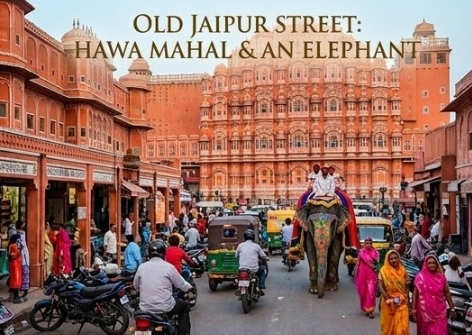
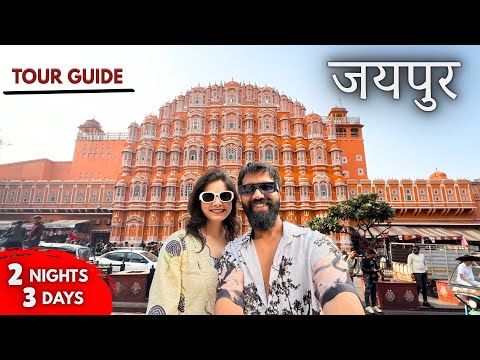
If you have seen a postcard of Jaipur, you have seen the Hawa Mahal. Built in 1799, this unique five-story structure looks like a giant, pink honeycomb. It features 953 intricately carved small windows called jharokhas.
- The Purpose: The Rajput royal court followed a strict system of purdah, meaning royal women were forbidden from being seen by the general public. The Hawa Mahal was built specifically as a viewing gallery. The queens and princesses could sit behind the latticework windows and watch street festivals, royal processions, and daily city life without ever being seen themselves.
- The Science: The architectural genius of the Hawa Mahal lies in its name. The hundreds of small windows create a Venturi effect, forcing air through the narrow openings and naturally air-conditioning the palace, keeping it incredibly cool even in the brutal Rajasthani summers.
City Palace: The Living Residence
Right in the center of the old city lies the spectacular City Palace. Unlike the abandoned forts, this palace is still very much alive. A portion of it remains the private residence of the modern-day Jaipur royal family.
- The Museums: The sections open to the public have been converted into world-class museums showcasing royal garments (including incredibly oversized clothes belonging to a massive former king), antique weaponry, and ancient manuscripts.
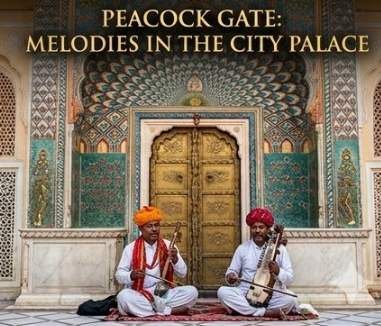
- Pritam Niwas Chowk: This inner courtyard is famous for its four magnificent, highly decorated doorways representing the four seasons and Hindu gods. The Peacock Gate, representing autumn, is a masterpiece of vibrant 3D painting and is one of the most photographed spots in India.
Jantar Mantar: The Astronomical Wonder
Just a short walk from the City Palace is an attraction that proves the Rajputs were not just warriors; they were brilliant scientists. Built by the city’s founder, Sawai Jai Singh II (who was deeply passionate about astronomy), Jantar Mantar is a collection of 19 massive architectural astronomical instruments.
Walking through it feels like walking through a surrealist sculpture park. The highlight is the Vrihat Samrat Yantra, the world’s largest stone sundial, which is a staggering 27 meters tall and can tell the local time with an accuracy of two seconds!
4. The Cultural Heartbeat: Shopping and Handicrafts
No travel guide covering Jaipur, Rajasthan: The Pink City & Rajput forts is complete without addressing the sheer joy of getting lost in its historic bazaars. The city is a globally recognized hub for traditional Indian handicrafts.
If you love shopping, bring an empty suitcase. The old city is divided into specific lanes, each dedicated to a different craft.
- Johari Bazaar (The Jeweler’s Market): Jaipur is world-famous for cutting and polishing precious and semi-precious stones. In Johari Bazaar, you can find everything from inexpensive silver trinkets to spectacular, multi-million-rupee Kundan and Meenakari (enamel work) bridal jewelry.
- Bapu Bazaar & Nehru Bazaar: If you love textiles, this is your paradise. Rajasthan is famous for its vibrant block-printed fabrics, bandhani (tie-dye), and light, warm quilts (Jaipuri Razai). This is also the best place to buy Mojaris—traditional, colorful, handcrafted camel leather shoes.
- Tripolia Bazaar: Known for its stunning ironware, brassware, and exquisite lac bangles. Watching a craftsman mold hot lac (a natural resin) into a beautifully studded bracelet right on the street is a mesmerizing experience.
(Pro-Tip: Bargaining is expected in the street markets. Do not be afraid to politely negotiate the price down by 30-40% of the initial quote!)

5. A Culinary Journey: What to Eat in the Pink City
Exploring the massive scale of Jaipur, Rajasthan: The Pink City & Rajput forts will inevitably make you incredibly hungry. Luckily, Rajasthani cuisine is some of the richest and most flavorful in all of India. Because of the historically harsh, arid desert conditions, the food here relies heavily on ghee (clarified butter), lentils, and hearty spices that can last without refrigeration.
- Dal Baati Churma: The undisputed king of Rajasthani food. Baati are hard, round wheat bread rolls baked over a fire. You crush the baati, pour rich lentil soup (dal) over it, and drench the whole thing in hot ghee. It is accompanied by churma, a sweet, crumbly mixture of crushed wheat and sugar. It is a heavy, sleep-inducing, and utterly delicious meal.
- Laal Maas (Red Meat): This is a fiery mutton curry traditionally prepared for the Rajput warrior kings after a hunt. It gets its vibrant red color and intense heat from local Mathania red chilies.
- Pyaz Ki Kachori: A famous breakfast or evening snack. It is a deep-fried, flaky pastry stuffed with a spicy, tangy onion filling. The best place in the city to try this is the legendary Rawat Mishthan Bhandar.
- Ghevar: A traditional Rajasthani dessert shaped like a disc, made from flour, fried in ghee, and soaked in sugar syrup, often topped with almonds, pistachios, and saffron. It is incredibly delicate and melts in your mouth.
6. Practical Travel Tips for Your Jaipur Adventure
To ensure your trip is as magical as the city itself, keep these practical realities in mind when planning your itinerary.
The Best Time to Visit
The weather in Rajasthan is extreme.
- October to March (The Golden Window): This is the absolute best time to visit. The days are pleasantly warm, perfect for climbing up to the forts, and the nights are cool and comfortable.
- April to June (The Brutal Summer): Avoid these months if possible. Temperatures regularly exceed 42°C (108°F). The heat reflecting off the stone forts can be dangerously exhausting.
- July to September (The Monsoon): While the rain brings relief from the heat and turns the surrounding Aravalli hills beautifully green, the humidity can be intense, and sudden downpours can interrupt your sightseeing.
Getting There and Around
- Arrival: Jaipur International Airport (JAI) is well-connected to major Indian cities and several international hubs in the Middle East. Alternatively, the city is a very comfortable 4-5 hour drive or train ride from New Delhi, making it the perfect weekend getaway.
- Local Transport: Auto-rickshaws (tuk-tuks) are the most convenient way to navigate the narrow, crowded streets of the old city. Apps like Uber and Ola are also widely available, safe, and take the stress out of negotiating fares.
How Many Days Do You Need?
To truly experience the depth of Jaipur, Rajasthan: The Pink City & Rajput forts, you need an absolute minimum of three full days.
- Day 1: Dedicate to the outskirts—Amer Fort, Jaigarh Fort, and a photo stop at the Jal Mahal (The Water Palace, which seemingly floats in the middle of Man Sagar Lake).
- Day 2: Focus on the walled city—The City Palace, Jantar Mantar, Hawa Mahal, and an evening of shopping in the bazaars.
- Day 3: Explore the incredible stepwells like Panna Meena Ka Kund, visit the Albert Hall Museum, and end your trip watching the sunset from Nahargarh Fort.
7. Conclusion: The Enduring Magic of Jaipur
In an era where cities across the world are becoming modernized, homogenized, and starting to look exactly the same, Jaipur stands as a defiant, colorful exception. It refuses to let go of its royal past.
When you visit Jaipur, Rajasthan: The Pink City & Rajput forts will leave an indelible mark on your soul. It is a city of overwhelming contrasts. You will find ancient traditions coexisting seamlessly with modern cafes, and centuries-old defensive walls looking down upon chaotic, vibrant traffic.
It is a place where history isn’t just locked away in dusty museums; it is lived every single day in the architecture, the food, the crafts, and the welcoming smiles of the local people. So pack your bags, prepare your camera, and get ready to step back in time into the breathtaking, royal world of the Pink City.