

As the gentle chill of winter fades and the vibrant warmth of spring begins to take hold, a wave of festive energy sweeps across Maharashtra. The streets hum with anticipation, homes are scrubbed clean, and the air is filled with the sweet scent of marigold and the earthy aroma of fresh mango leaves. This beautiful shift in the seasons marks the arrival of Gudi Padwa, the traditional Maharashtrian New Year.

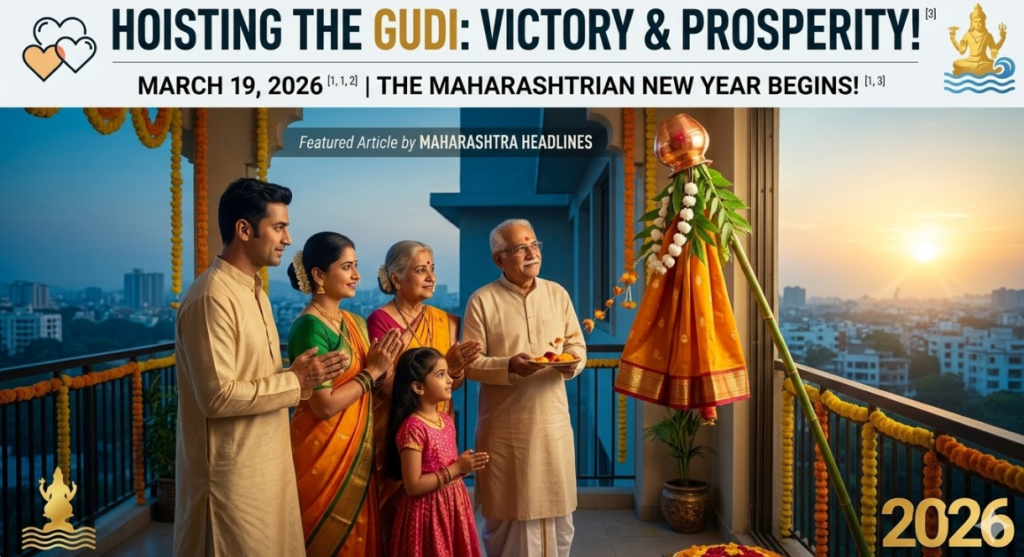
Gudi Padwa is not just a date on the calendar; it is a profound cultural emotion. It represents the triumph of good over evil, the onset of the harvest season, and a collective deep breath as communities prepare for a year of fresh starts. Whether you are deeply rooted in these traditions, planning to celebrate for the first time, or simply curious about the rich tapestry of Indian festivals, this comprehensive guide will walk you through the history, the rituals, the culinary delights, and the modern digital expressions of this spectacular day.
Decoding the Luni-Solar Calendar: Understanding the Gudipadva Date
If you have ever wondered why Hindu festivals do not fall on the exact same day every year according to the standard Gregorian calendar, the answer lies in the ancient and highly precise Hindu luni-solar calendar. This system tracks both the phases of the moon and the position of the sun.
Gudi Padwa is celebrated on the very first day of the Chaitra month—specifically, on Chaitra Shukla Pratipada (the first day of the bright phase of the moon). Because the lunar year is slightly shorter than the solar year, the exact gudipadva date shifts annually.
To put this into perspective, we can look at the recent timeline:
- Gudipadva 2025: Last year, the festival fell at the very end of the month, celebrated with great fervor on Sunday, March 30, 2025.
- Gudipadva 2026: This year, the lunar cycle places the festival significantly earlier. The gudipadva 2026 celebration takes place on Thursday, March 19, 2026.
According to the Panchang (the Hindu astrological almanac), the Pratipada Tithi for 2026 begins at 6:52 AM on March 19 and concludes at 4:52 AM on March 20. In Hindu tradition, festivals are generally observed based on the tithi (lunar day) that is active during the sunrise. Since the Pratipada is active at sunrise on the 19th, that Thursday is universally recognized as the correct day to hoist the Gudi and welcome the Marathi Shaka Samvat 1948.
The Mythological and Historical Tapestry
The celebration of Gudi Padwa is woven from multiple threads of ancient mythology and regional history. Understanding these stories adds a profound layer of meaning to the morning rituals.


1. The Creation of the Universe
According to the Brahma Purana, one of the most revered ancient Hindu texts, Lord Brahma—the creator of the universe—chose this specific day to create the world. After a massive deluge that wiped out time and space, Lord Brahma set the cosmic clock into motion, creating days, weeks, months, and years. Therefore, celebrating this day is essentially celebrating the birthday of the universe itself.
2. The Triumphant Return of Lord Rama
Another deeply held belief links Gudi Padwa to the epic Ramayana. After spending fourteen grueling years in exile and defeating the demon king Ravana, Lord Rama returned to his kingdom of Ayodhya. The citizens of Ayodhya were overwhelmed with joy and decorated their homes, hoisting victory flags (Brahmadhvaj) to welcome their righteous king. The modern-day Gudi is a direct descendant of those ancient flags of victory.
3. The Shalivahana Calendar and Maratha Pride
From a historical standpoint, the day is closely associated with King Shalivahana. Legend states that he defeated the invading Sakas and Huns, and the day commemorates his monumental victory, which led to the establishment of the Shalivahana Shaka calendar—the exact calendar still used today in Maharashtra.
Furthermore, during the era of the great Maratha Empire, Chhatrapati Shivaji Maharaj popularized the celebration of Gudi Padwa to celebrate his military victories and the establishment of a sovereign state. To this day, the Gudi is seen not just as a religious emblem, but as a proud symbol of Maratha resilience and independence.
Anatomy of the Gudi: A Beacon of Prosperity
The most distinctive and vital aspect of this festival is the erection of the Gudi itself. Walk through any Maharashtrian neighborhood on the morning of Gudi Padwa, and you will see these beautiful, colorful flags leaning slightly outward from windows, balconies, and rooftops, positioned specifically on the right side of the main entrance.
Every single element of the Gudi is highly symbolic:
- The Bamboo Stick: A long, sturdy bamboo pole serves as the spine of the Gudi. Bamboo represents earthly roots, strength, and the ability to stand tall and weather any storm.
- The Silk Cloth: A bright, new piece of fabric is draped elegantly at the top of the pole. Traditionally, this is a Khun fabric or a rich silk cloth with a heavy zari border. Bright colors like yellow, saffron, red, or green are chosen to symbolize wealth, joy, and the vibrancy of spring.
- Neem and Mango Leaves: A fresh twig of neem and a cluster of mango leaves are tied over the cloth. Neem acts as a purifier, warding off negative energies and physical ailments, while mango leaves symbolize the promise of a bountiful harvest and eternal life.
- The Gaathi (Sugar Garland): A garland made of crystallized sugar (gaathi) is draped around the leaves. This represents the sweetness of life and the hope that the new year will bring joyous moments.
- The Copper or Silver Kalash: Finally, the entire arrangement is crowned with an inverted copper, bronze, or silver pot (kalash). The inverted shape is believed to act as a cosmic antenna, capturing the positive, divine energies from the atmosphere and funneling them directly into the home.
Once assembled, the Gudi is hoisted right after sunrise. The family gathers around, offers prayers with haldi (turmeric), kumkum (vermilion), and flowers, and seeks blessings for a prosperous year ahead.
The Art at the Doorstep: Designing the Gudipadva Rangoli
No Indian festival is complete without vibrant floor art, and Gudi Padwa is no exception. Long before the sun rises, the courtyards and entryways of homes are swept clean. Traditionally, a mixture of water and cow dung was spread to purify the ground, though today, plain water is often sprinkled to settle the dust.
Creating a gudipadva rangoli is considered an auspicious act of welcoming Goddess Lakshmi (the deity of wealth) and positive energy into the home.
Styles and Motifs
In Maharashtra, the Sanskar Bharti style of rangoli is immensely popular. This technique involves using three or four fingers or a special funnel to draw thick, perfectly proportioned white lines in concentric circles.
The motifs used in a gudipadva rangoli are deeply thematic:
- The Gudi Motif: Many choose to draw a beautiful, detailed replica of the Gudi itself at the center of the design.
- Swastika and Lotus: Ancient symbols of purity, peace, and divine presence.
- Mango Leaves and Kalash: Representing abundance and the traditional welcoming of guests.
Once the white borders are drawn, the spaces are filled with brilliant, eye-catching colors like magenta, bright yellow, emerald green, and deep orange. The final touch often includes placing small lit diyas (oil lamps) or fresh flower petals around the edges. The rangoli stands as a temporary but breathtaking piece of art, a reminder that life should be lived beautifully and vibrantly each day.

The Morning Rituals: Embracing the Bitter and the Sweet
The spiritual philosophy of Gudi Padwa is beautifully encapsulated in its morning rituals. The day begins before dawn with an Abhyanga Snan—a traditional bath using scented oils and herbal powders. This is not just for physical cleanliness; it is an Ayurvedic practice designed to rejuvenate the body and prepare it for the changing seasons as the intense summer heat begins to approach.
Following the bath, family members wear new clothes. Traditional attire takes center stage: men often wear pristine white kurtas with a vibrant pheta (turban), while women drape themselves in elegant nine-yard Nauvari sarees, adorned with traditional gold jewelry like the nath (nose ring).
The First Bite of the Year
Before any celebratory sweets are consumed, everyone in the family must partake in a highly unique and symbolic prasad (offering). A paste is prepared using tender neem leaves, jaggery, tamarind, and a pinch of salt.
This specific mixture is profoundly philosophical. Life is never a straight line of unending happiness; it is a complex blend of bitter struggles (represented by the neem), sweet victories (the jaggery), and tangy, unpredictable surprises (the tamarind). By eating this mixture on the very first day of the year, Maharashtrians make a spiritual commitment to accept whatever life throws at them with grace and equanimity.
Scientifically, this mixture is a powerhouse of health. As the weather shifts from cool to hot, neem acts as a natural antibacterial agent that boosts immunity, while jaggery provides a sudden spike of energy and iron.
A Feast for the Senses: Culinary Delights of Gudi Padwa
Once the philosophical rituals are complete, it is time for the sheer joy of the festive feast. Maharashtrian cuisine is celebrated for its incredible balance of flavors, and the Gudi Padwa taat (platter) is an absolute masterpiece.
Families spend hours in the kitchen preparing traditional delicacies that have been passed down through generations. Some of the star dishes include:
- Puran Poli: The undisputed king of the Maharashtrian festive table. Puran Poli is a soft, warm flatbread stuffed with a sweet, aromatic filling made from chana dal (split Bengal gram), jaggery, cardamom, and nutmeg. It is served fresh off the griddle with a generous, melting dollop of sajuk tup (pure homemade ghee).
- Shrikhand and Puri: As the days get warmer, Shrikhand—a thick, strained yogurt dessert flavored with saffron, cardamom, and chopped nuts—becomes the perfect cooling treat. It is scooped up with hot, deep-fried, puffy puris.
- Aamrus: In many households, especially if the mango season has arrived early, a bowl of thick, sweet aamrus (mango pulp) makes its first highly anticipated appearance of the year.
- Savory Accompaniments: To balance the overwhelming sweetness, the meal includes savory, spicy dishes like Batatyachi Bhaji (a dry, tempered potato curry), Kothimbir Vadi (crispy coriander fritters), and a tangy Amti (spiced dal).
Sitting down together for this heavy, luxurious meal is a bonding experience, reinforcing the importance of family, gratitude, and the sharing of resources.
Modern Celebrations: The Era of the Gudipadva PNG and Digital Wishes
While the core rituals of Gudi Padwa have remained unchanged for centuries, the way we share our joy has evolved dramatically with technology. In today’s fast-paced, interconnected world, families are often spread across different cities and continents. But physical distance no longer stops the celebration.
In the weeks leading up to the festival, there is a massive surge in online searches for the perfect gudipadva png. A PNG (Portable Network Graphic) is an image file format that supports transparent backgrounds. Graphic designers, digital artists, and everyday users seek out high-quality, transparent images of the Gudi, mango leaves, and traditional Marathi calligraphy to create stunning, customized greeting cards.
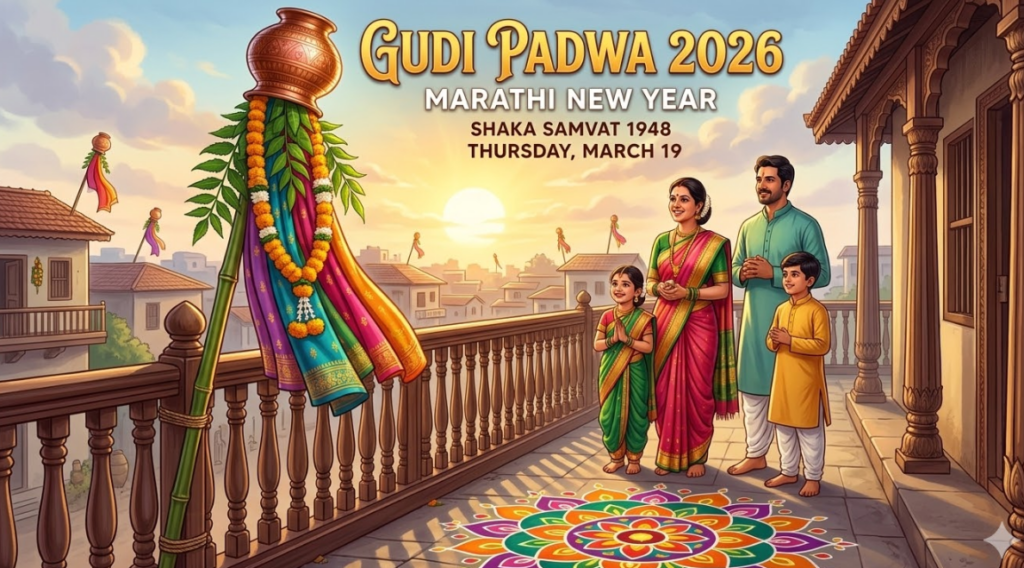
These digital assets allow people to blend ancient traditions with modern graphic design. A beautifully designed gudipadva png can be seamlessly overlaid onto a family photograph, a video message, or a colorful background to create the perfect WhatsApp forward or Instagram story. This digital evolution ensures that the aesthetic and the message of the festival remain highly relevant and accessible to the younger, tech-savvy generation.
From sending animated stickers of a swaying Gudi to hosting virtual family video calls where everyone shows off their festive attire and home-cooked meals, technology has become a beautiful bridge that keeps the cultural flame burning bright, no matter where in the world you might be.
The Essence of Vasant Ritu
Beyond the religion and the mythology, Gudi Padwa is profoundly connected to the earth. It marks the arrival of Vasant Ritu (spring). It is the time when the hard work of the farmers comes to fruition with the harvesting of the Rabi crops. The trees sprout fresh, light green leaves, the days grow longer, and nature shakes off the lethargy of winter.
The hoisting of the Gudi is as much an agricultural celebration as it is a spiritual one. It is humanity’s way of saying thank you to the earth for its bounty and praying for favorable rains and fertile soil in the coming cycle.
Looking Upward and Moving Forward
As the sun sets on Gudi Padwa, families gently take down the Gudi, drinking the water from the kalash and distributing the sweet gaathi among children and neighbors. The bamboo is put away, but the sentiment remains.
The overarching message of the Maharashtrian New Year is one of profound optimism. The Gudi is intentionally hoisted high up, pointing toward the sky. It is a visual, daily reminder to always aim higher, to keep your spirits elevated regardless of the circumstances, and to face the incoming year with courage, sweetness, and an unshakeable belief in the victory of good.
With gudipadva 2026 arriving swiftly on March 19, the time for preparation is now. It is time to dust off the old, welcome the new, and embrace the vibrant chaos of a brand new beginning