


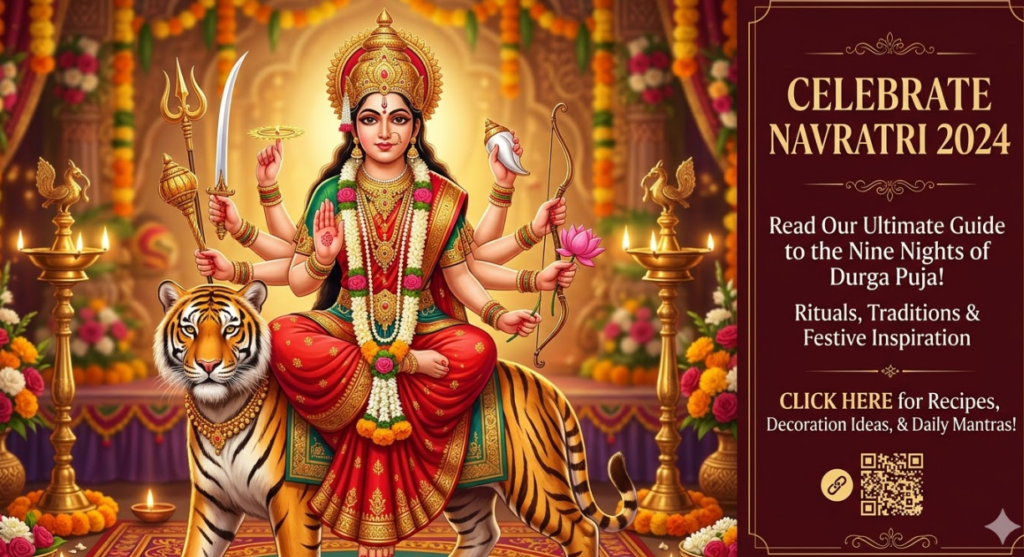
As the crisp chill of winter melts into the warm, golden embrace of spring, India awakens to a deeply spiritual vibration. Today, March 19, 2026, marks the vibrant beginning of Chaitra Navratri, a nine-day festival dedicated to the profound worship of Maa Durga and her nine magnificent forms (Navadurga).
For millions across the country and the globe, these nine days are not just a mark on the calendar; they represent a journey of physical detoxification, mental purification, and spiritual rebirth. Coinciding with the Hindu New Year (celebrated as Gudi Padwa in Maharashtra and Ugadi in the South), Chaitra Navratri is a celebration of new beginnings, blooming nature, and the ultimate victory of divine light over ignorance.
In this comprehensive, easy-to-understand guide, we will walk you through everything you need to know about Chaitra Navratri 2026. From the step-by-step simple home Puja Vidhi (rituals) to the specific colors and significance of each of the nine days, and the scientific reasons behind the Navratri fast—we have covered it all. Let’s embark on this beautiful journey of invoking the Shakti (divine energy) within us. The Navratri festival is a special nine-night celebration.
The Spiritual Essence: Why Do We Celebrate Navratri?
The word “Navratri” is derived from Sanskrit, where “Nava” means nine and “Ratri” means nights. According to Hindu philosophy, the nights are meant for rest and rejuvenation. Similarly, these nine nights are dedicated to withdrawing from the chaos of the external world and resting in the lap of the Divine Mother to rejuvenate our souls.
While Sharad Navratri (in autumn) is more famous for its grand pandals and Garba dances, Chaitra Navratri (in spring) is deeply focused on personal penance, fasting, and intense meditation. It culminates on the ninth day with Ram Navami, celebrating the birth of Lord Rama.
The festival honors Goddess Durga, the ultimate manifestation of cosmic energy. She is the mother of the universe, fierce enough to destroy demons yet gentle enough to hold the world in her embrace. Worshipping her is a reminder that within every human being lies an untapped reservoir of strength, courage, and unconditional love.
Ghatasthapana: The Sacred Beginning (Day 1)
The festival begins today, March 19, 2026, with the most crucial ritual: Ghatasthapana or Kalash Sthapana. This is the invocation of Goddess Durga to reside in our homes for the next nine days of Navratri.
How to do a simple Kalash Sthapana at home:
- Cleanliness: Wake up early, take a bath, and thoroughly clean your puja room.
- The Base: Take an earthen pot or a wide clay tray. Spread a layer of clean soil in it and sow barley (Jau) seeds. This represents growth, prosperity, and fertility.
- The Kalash: Take a copper, brass, or silver pot (Kalash). Fill it with pure water (mixed with a little Ganga Jal). Drop a coin, betel nut (supari), raw rice (akshat), and a flower into the water.
- The Leaves: Place five mango or Ashoka leaves at the mouth of the Kalash.
- The Coconut: Wrap a whole coconut (with its husk) in a red cloth, tie it with a sacred red thread (mouli or kalava), and place it on top of the Kalash.
- Placement: Place this Kalash in the center of the earthen tray containing the sown barley. Light an Akhand Jyot (a continuously burning oil/ghee lamp) that should ideally stay lit for all nine days.
Over the next nine days, you will water the barley. By the end of Navratri, the seeds will sprout into bright green shoots (called Khetri or Harela), which are considered the direct blessing of the Goddess.
The 9 Days of Chaitra Navratri: Forms, Colors, and Significance
Each day of Navratri is dedicated to a specific incarnation of Goddess Durga. The Goddess evolves from a daughter of the mountains to the supreme creator of the universe. Wearing specific colors each day is a beautiful tradition that helps devotees feel connected to the energy of that specific form.

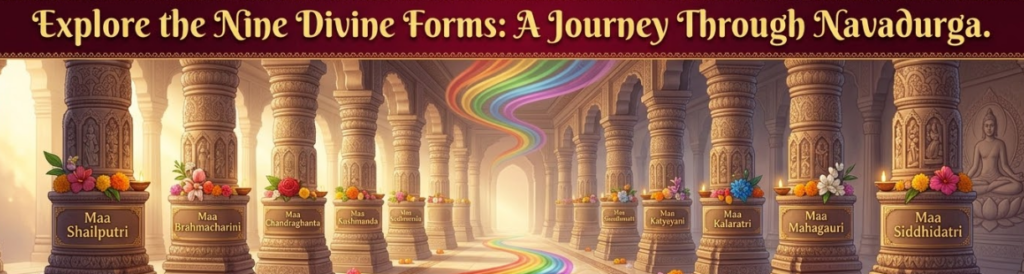
Here is your complete day-by-day guide for Chaitra Navratri 2026:
Day 1: Maa Shailputri (March 19, 2026)
- The Story: “Shail” means mountain, and “Putri” means daughter. After self-immolating as Sati, the Goddess was reborn as Parvati, the daughter of Lord Himalaya. Maa Shailputri rides a white bull (Nandi) and holds a trident and a lotus.
- The Significance: She represents nature, purity, and the awakening of the Root Chakra (Muladhara). She grounds us.
- Color to Wear: Yellow (Represents joy, energy, and cheerfulness).
- Favorite Bhog (Offering): Pure Desi Ghee or sweets made of ghee. It is believed to bless the devotee with a disease-free life.
Day 2: Maa Brahmacharini (March 20, 2026)
- The Story: “Brahma” implies penance (Tapas), and “Charini” means an ardent female follower. This form represents Goddess Parvati when she engaged in severe penance for thousands of years in the forest to win Lord Shiva as her husband. She walks barefoot, carrying a Japmala (rosary) and a Kamandalu (water pot).
- The Significance: She teaches us patience, emotional strength, and the power of strict discipline. She shows that hard work and focus never go unrewarded.
- Color to Wear: Green (Represents nature, growth, and new beginnings).
- Favorite Bhog: Sugar and Panchamrit (a mixture of milk, curd, ghee, honey, and sugar).
Day 3: Maa Chandraghanta (March 21, 2026)
- The Story: After marrying Lord Shiva, Parvati adorned her forehead with a half-moon shaped like a bell (Ghanta). Maa Chandraghanta is a fierce, ten-armed warrior goddess riding a tiger, ready for war against evil.
- The Significance: The sound of her moon-bell is said to terrify demons and negative energies. She represents bravery, courage, and the readiness to fight for what is right.
- Color to Wear: Grey (Represents balanced emotions and keeping a cool head, even when ready to fight).
- Favorite Bhog: Milk or milk-based sweets like Kheer. It is believed to bring peace and relief from worldly pains.
Day 4: Maa Kushmanda (March 22, 2026)
- The Story: She is known as the creator of the universe. Legend says that when there was only darkness, Maa Kushmanda smiled, and her radiant smile created the cosmic egg (the universe). She has eight arms and radiates the glow of the sun.
- The Significance: She resides in the core of the Sun, providing energy and light to the entire solar system. Worshipping her brings health, wealth, and immense energy.
- Color to Wear: Orange (Represents brightness, happiness, and creative energy).
- Favorite Bhog: Malpua. Offering this is said to improve intellect and decision-making skills.
Day 5: Maa Skandamata (March 23, 2026)
- The Story: “Skanda” is another name for Lord Kartikeya (the god of war), and “Mata” means mother. In this form, the Goddess is seated on a lotus, carrying the infant Lord Skanda in her lap.
- The Significance: She represents the ultimate vulnerability and fierce protective instinct of a mother. Worshipping her is equal to worshipping Lord Kartikeya as well. She grants salvation and earthly joys.
- Color to Wear: White (Represents purity, peace, and meditation).
- Favorite Bhog: Bananas. It is believed to keep the devotee healthy and physically strong.
Day 6: Maa Katyayani (March 24, 2026)
- The Story: To destroy the arrogant buffalo-demon Mahishasura, the trinity of Brahma, Vishnu, and Shiva combined their energies to create Maa Katyayani. She is the fiercest warrior goddess, riding a magnificent lion and holding a sparkling sword.
- The Significance: She represents righteous anger and the destruction of ego and tyranny. She empowers young women and is often prayed to for removing obstacles in marriage.
- Color to Wear: Red (Represents passion, fierce love, action, and vigor).
- Favorite Bhog: Honey. Offering honey brings sweetness to life and helps overcome bitter circumstances.
Day 7: Maa Kalaratri (March 25, 2026)
- The Story: Also known as Shubhankari, this is the most terrifying form of the Goddess. She has a dark black complexion, disheveled hair, and breathes fire. She rides a donkey and holds a blood-soaked cleaver. She took this form to kill the demons Shumbha and Nishumbha.
- The Significance: Despite her fearful appearance, she always grants auspicious results to her devotees. She destroys ignorance, fear of darkness, and the fear of death.
- Color to Wear: Royal Blue (Represents divine energy, depth, and immense power).
- Favorite Bhog: Jaggery (Gud). It is believed to bring relief from sudden crises and pains.
Day 8: Maa Mahagauri (March 26, 2026) – Ashtami
- The Story: After shedding her dark skin (Kalaratri), she regained her extremely fair, radiant complexion. “Maha” means great, and “Gauri” means fair. She radiates pure peace and compassion, dressed in pristine white, riding a white bull.
- The Significance: She cleanses the devotees of all past sins and purifies the soul.
- Color to Wear: Pink (Represents universal love, affection, and harmony).
- Favorite Bhog: Coconut.
- Special Ritual (Kanya Pujan): On this day (Maha Ashtami), devotees wash the feet of young, unmarried girls (representing the Goddess), tie a red thread on their wrists, and serve them a special meal of Halwa, Puri, and Chana.
Day 9: Maa Siddhidatri (March 27, 2026) – Navami / Ram Navami
- The Story: “Siddhi” means supernatural power or perfection, and “Datri” means the giver. She is seated on a lotus and grants all types of spiritual and worldly perfection to her devotees. It is believed that Lord Shiva attained his “Ardhanarishvara” (half-man, half-woman) form by the grace of Maa Siddhidatri.
- The Significance: She is the culmination of the Navratri journey. Worshipping her brings the realization of the ultimate truth. This day also beautifully coincides with Ram Navami, celebrating the birth of Lord Rama, making it incredibly auspicious.
- Color to Wear: Purple (Represents ambition, luxury, and supreme spiritual power).
- Favorite Bhog: Sesame Seeds (Til) or food made from them.
The Navratri Vrat: Fasting Rules and The Science Behind It
Millions observe a strict fast (Vrat) during Chaitra Navratri. But this isn’t merely a religious obligation; it is an ancient, highly scientific practice deeply rooted in Ayurveda.
The Scientific Reason
Chaitra Navratri always falls during the transition phase between spring and summer. During this seasonal shift, our bodies are highly susceptible to imbalances, lower immunity, and digestive sluggishness. Eating heavy, oily, or non-vegetarian food during this time can make the body a breeding ground for diseases. Fasting acts as an incredible detox. By consuming a light, Sattvic (pure) diet, we give our digestive system a rest and prepare our bodies for the scorching summer ahead.

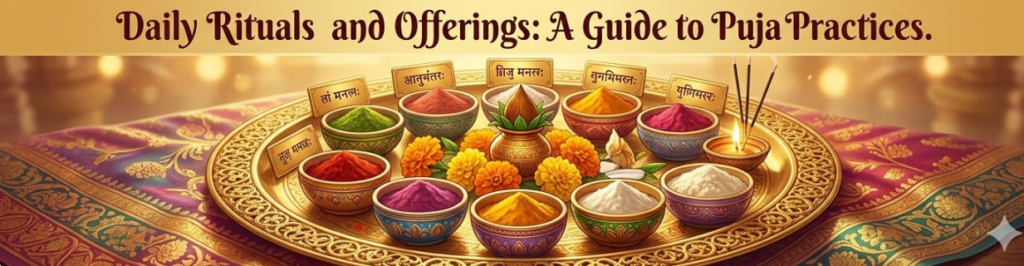
What to Eat (Sattvic Diet):
- Flours: Buckwheat (Kuttu ka Atta), Water Chestnut (Singhare ka Atta), Amaranth (Rajgira).
- Grains/Seeds: Tapioca pearls (Sabudana), Barnyard Millet (Samak ke Chawal).
- Vegetables: Potatoes, sweet potatoes, pumpkin, bottle gourd (lauki), raw banana.
- Spices: Only rock salt (Sendha Namak), black pepper, cumin seeds (jeera), and green chilies.
- Dairy & Fruits: All fresh fruits, milk, curd, paneer, and ghee.
What to Strictly Avoid (Tamasic Diet):
- Regular grains like wheat, rice, and besan.
- Regular table salt.
- Onion and Garlic (They are considered Tamasic, meaning they induce lethargy and heat in the body).
- Non-vegetarian food, eggs, and alcohol.
- Processed foods and heavy spices.
What Navratri Truly Means Today
It is easy to get lost in the list of rituals, the strict fasting rules, and the vibrant colors. However, the true essence of Chaitra Navratri requires a deeper, more human reflection.
What does it mean to worship a female deity for nine days in the modern world?
Worshipping Maa Durga in a temple is incomplete if we do not respect the Shakti (divine feminine) that exists in our real lives. Navratri is a profound reminder to honor the women around us—our mothers, sisters, daughters, partners, and colleagues. True devotion is ensuring that our homes and societies are safe and empowering spaces for women to thrive, just like the Goddess.
Furthermore, the demons that Maa Durga destroys—Mahishasura, Shumbha, Nishumbha—are not just mythological monsters from the past. They represent the demons living inside our own minds today: our ego, our greed, our stress, our anger, and our prejudices.
Fasting from food is easy; fasting from negative thoughts is the real challenge. Use these nine days of Chaitra Navratri 2026 to detoxify not just your body, but your mind. Let go of past grudges. Forgive someone. Practice patience. When you conquer your inner demons, you awaken the true Durga within you.

Conclusion: A Beautiful New Beginning
As we step into Chaitra Navratri 2026 today, let us embrace the festive spirit with open hearts and a calm mind. Whether you are observing a strict waterless fast, eating sabudana khichdi, or simply lighting a single diya after a long day at the office—do it with devotion. We hope this guide helps you have a meaningful and joyous Navratri celebration.
May Maa Durga bless your home with the resilience of Shailputri, the courage of Chandraghanta, the light of Kushmanda, and the ultimate peace of Mahagauri. Here is wishing you and your loved ones a very Happy, Healthy, and Blessed Chaitra Navratri and a joyous Hindu New Year!
Jai Mata Di!