
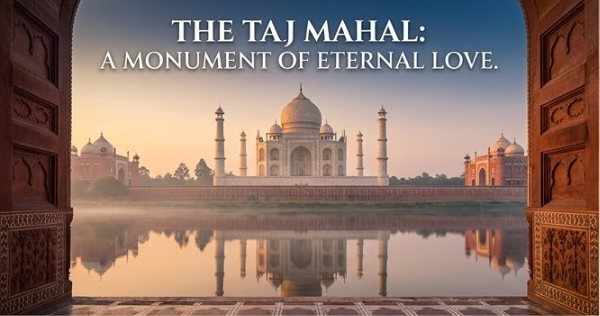
There is a specific moment that every traveler experiences when they first arrive in Agra. You might be tired from the train journey or the drive from Delhi. The streets around you are a whirlwind of sounds—honking auto-rickshaws, vendors calling out their wares, the vibrant, chaotic energy of a busy North Indian city.
But then, you step through a massive red sandstone gateway, and the noise suddenly fades. Before you, framed perfectly by the archway, sits a monument so ethereal and flawless that it almost looks like an optical illusion floating above the Yamuna River.
The Taj Mahal.
However, to visit Agra and only see the Taj Mahal is to read only the final chapter of a magnificent, complex book. Agra is not just the home of a beautiful tomb; it was the beating heart of the mighty Mughal Empire for generations. It is a city of passionate romances, bitter family rivalries, brilliant architectural innovations, and a culinary legacy that still shapes how India eats today.
If you are planning a trip to Agra, or if you simply want to lose yourself in the rich tapestry of Indian history, this comprehensive guide will walk you through the monuments, the stories, and the streets of this unforgettable city.
1. The Crown Jewel: The Taj Mahal and the Ultimate Love Story
Any journey into Agra’s history must begin with its most famous silhouette. The Taj Mahal is widely considered the most beautiful building ever created by human hands, earning its rightful place as one of the New Seven Wonders of the World. But beyond the perfect symmetry and the gleaming white marble lies a deeply human story of grief and devotion.
The Story of Shah Jahan and Mumtaz Mahal
In the early 17th century, the Mughal Emperor Shah Jahan ruled over a vast and incredibly wealthy empire. While emperors of that era took many wives for political alliances, historical accounts suggest that Shah Jahan had eyes only for one: Arjumand Banu Begum, whom he gave the title Mumtaz Mahal (Chosen One of the Palace).
She was his confidante, his political advisor, and his constant companion, even traveling with him on military campaigns. Tragically, in 1631, while giving birth to their fourteenth child, Mumtaz Mahal died. According to legend, on her deathbed, she asked Shah Jahan to build her a mausoleum more beautiful than anything the world had ever seen, so that their love would never be forgotten.
Heartbroken, Shah Jahan poured the immense wealth of the Mughal treasury into fulfilling this promise.
Architectural Brilliance: Poetry in Stone
Construction began in 1632 and took roughly 22 years to complete, employing a workforce of around 20,000 artisans from across India, Persia, the Ottoman Empire, and Europe.
When you visit, pay attention to these mind-boggling details that photos simply cannot capture:
- The Optical Illusions: As you walk closer to the main gate, the Taj Mahal actually appears to shrink. As you walk away, it seems to grow larger. The minarets (the four tall pillars surrounding the dome) are built tilting slightly outward. This was done so that in the event of an earthquake, they would fall away from the main tomb, protecting the resting place of the Queen.
- Pietra Dura (Parchin Kari): Walk up to the white marble walls and look closely at the colorful floral patterns. These are not painted. This is an intricate art form where the white marble is carved out, and semi-precious stones (like lapis lazuli, jade, crystal, and turquoise) are painstakingly cut and fitted perfectly into the grooves.
- The Changing Colors: The translucent nature of the Makrana marble means the Taj Mahal changes color depending on the time of day. It is a soft, glowing pink at dawn, a blindingly brilliant white at noon, and a golden hue at sunset. Under a full moon, it glows with an otherworldly silver light.
Pro-Tips for Visiting the Taj Mahal
- Go at Sunrise: Yes, it requires waking up in the dark, but being at the gates right when they open is the only way to beat the massive crowds and the intense midday heat. The morning mist coming off the Yamuna river adds a magical quality to the photographs.
- Book Tickets Online: Skip the physical ticket counters entirely. Buy your tickets in advance through the official Archaeological Survey of India (ASI) website to save time.
- Respect the Rules: Remember that this is a mausoleum and an active mosque is on the premises. Dress modestly, and be prepared to wear shoe covers (provided with your ticket) when walking on the main marble platform.
2. Agra Fort: The Red Sandstone Seat of Absolute Power
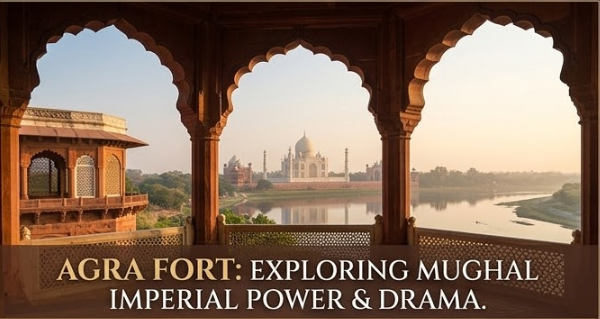
While the Taj Mahal represents the romantic soul of the Mughal Empire, the Agra Fort represents its muscle, its politics, and its dramatic family betrayals. Located just 2.5 kilometers from the Taj Mahal, this massive UNESCO World Heritage site is an absolute must-visit.
Calling it a “fort” is almost a disservice; it is a sprawling, walled palatial city.
The Evolution of the Fort
The fort was originally built by Emperor Akbar in 1565. Akbar was a military genius and built the walls using solid red sandstone for strength and defense. However, as the empire grew more secure, his grandson, Shah Jahan, began knocking down some of the red sandstone structures to build his preferred elegant white marble palaces within the walls.
Walking through Agra Fort is like walking through a timeline of Mughal architectural tastes, moving from the robust, masculine red sandstone of Akbar’s era to the delicate, feminine white marble of Shah Jahan’s time.
Key Palaces Inside Agra Fort
- Jahangiri Mahal: Built by Akbar for his son Jahangir, this is the largest private residence in the fort. It perfectly blends Hindu and Islamic architectural styles, a hallmark of Akbar’s tolerant reign.
- Diwan-i-Aam (Hall of Public Audience): Here, the Emperor would listen to the grievances of the common people. Imagine the room draped in rich carpets and silk, with the Emperor sitting on the legendary, jewel-encrusted Peacock Throne.
- Musamman Burj (The Tragic Tower): This is the most emotional stop in the fort. It is a beautiful, octagonal white marble tower with a balcony facing the Yamuna River. It was here that Shah Jahan spent the last eight years of his life. He was overthrown and imprisoned by his own son, Aurangzeb. From this balcony, the aging, captive emperor could do nothing but gaze down the river at the Taj Mahal, the tomb of his beloved wife, until the day he died.
3. Fatehpur Sikri: The Magnificent Ghost City
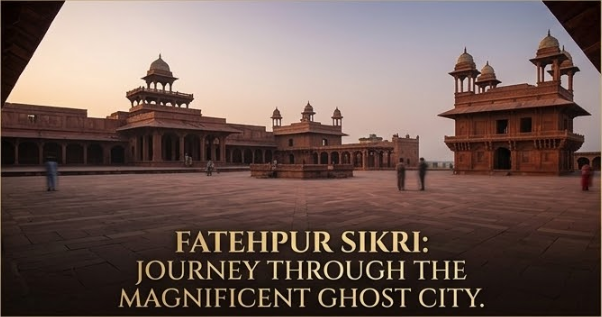
If you have an extra half-day in Agra, you must take the 40-kilometer drive to Fatehpur Sikri. This is one of the most fascinating historical sites in all of India—a perfectly preserved, entirely abandoned imperial city.
The Emperor’s Quest for an Heir
Emperor Akbar, despite having a massive empire and several wives, was desperate for a male heir to inherit the throne. He visited a Sufi saint named Shaikh Salim Chishti, who lived in the small village of Sikri. The saint prophesied that Akbar would have three sons. Soon after, his first son (who would become Emperor Jahangir) was born.
Overjoyed and believing the site to be incredibly lucky, Akbar decided to move his entire capital from Agra to this village, renaming it Fatehpur Sikri (The City of Victory).
A Masterpiece Abandoned
For 14 years, this city was the center of the Mughal world. Akbar built stunning palaces, courtyards, and massive mosques. The architecture here is unique, heavily utilizing red sandstone and showcasing a brilliant fusion of Persian, Hindu, and Jain design philosophies.
Highlights include:
- Buland Darwaza (The Gate of Magnificence): Standing a staggering 54 meters high, this is the highest gateway in the world, built to commemorate Akbar’s victory over Gujarat.
- Tomb of Salim Chishti: Nestled within the red sandstone courtyard is the brilliant white marble tomb of the Sufi saint. To this day, people of all faiths tie red threads to the intricately carved marble screens, making a wish for a child or a blessing.
- Panch Mahal: A striking, five-story palace built entirely of columns, designed to catch the breeze for the ladies of the royal court.
So, why is it a ghost town? Despite all the brilliant engineering, the Mughal architects failed to secure a reliable water supply. The local lake dried up, and the wells could not sustain the massive population of the imperial court. Just 14 years after it was built, the city was entirely abandoned, and the capital moved back to Agra, and later to Lahore. Today, walking through its empty courtyards feels like stepping straight into the 16th century.
4. The Hidden Gems: Baby Taj and Mehtab Bagh
To truly understand Agra’s Mughal history, you need to step away from the massive crowds and visit two quieter, incredibly significant sites.
Tomb of I’timad-ud-Daulah (The “Baby Taj”)
Before the Taj Mahal was built, Mughal buildings were primarily made of red sandstone. The Tomb of I’timad-ud-Daulah changed everything. Built by Empress Nur Jahan (the wife of Emperor Jahangir) for her father, this was the first Mughal structure to be built completely out of white marble.
It is often called the “Draft of the Taj Mahal” because it was the first building to heavily use the pietra dura (stone inlay) technique. Because it is smaller and receives fewer visitors, you can appreciate the incredibly delicate artwork up close in absolute peace.
Mehtab Bagh (The Moonlight Garden)
If you want the absolute best view of the Taj Mahal without the crowds, head across the Yamuna River to Mehtab Bagh.
This is a massive, square garden complex aligned perfectly with the Taj Mahal. Legend has it that Shah Jahan intended to build an exact replica of the Taj Mahal in black marble on this very spot as his own tomb, connecting the two with a silver bridge. While archaeological evidence suggests the “Black Taj” was likely just a myth, Mehtab Bagh is undeniably the most spectacular place in Agra to watch the sunset. As the sun dips behind the Taj Mahal, the white marble reflects in the river, offering a photographer’s dream landscape.
5. Immersing in Agra’s Culture: Food and Handicrafts
The Mughals didn’t just leave behind buildings; they left behind a rich, sensory culture that still thrives in the narrow alleyways of Agra. A proper travel guide must include what to eat and what to bring home.
The Legacy of Mughlai Cuisine
The Mughal emperors were known for their lavish feasts. They brought Persian cooking styles to India, blending them with rich Indian spices. This resulted in Mughlai cuisine—characterized by creamy curries, slow-cooked meats, nuts, saffron, and aromatic rice.
- What to eat: You must try authentic Murgh Korma (a rich, creamy chicken curry), Nargisi Kofta (meatballs stuffed with boiled eggs), and fragrant Biryani.
- Street Food: Agra also has a vibrant street food scene. Start your morning like a local with Bedmi Puri and Aloo Sabzi—fluffy, deep-fried bread served with a spicy, tangy potato curry.
The Iconic Sweet: Agra Petha
You cannot leave Agra without eating Petha. This unique, translucent candy is made from ash gourd (winter melon) soaked in lime water and then boiled in flavored sugar syrup. It comes in dozens of flavors, from classic saffron (Kesar) to modern twists like chocolate or Paan (betel leaf). It is the perfect, shelf-stable souvenir to bring back for friends and family.
Shopping for Mughal Handicrafts
The descendants of the artisans who built the Taj Mahal still live in Agra today.

- Marble Inlay Work: You will find hundreds of shops selling marble tabletops, coasters, and jewelry boxes featuring the same pietra dura stone inlay technique seen on the Taj Mahal. Just be sure to buy from reputable government-approved emporiums to ensure you are getting real marble and semi-precious stones, not painted soapstone.
- Leather Goods: Agra is historically one of India’s largest hubs for leather manufacturing, particularly known for high-quality shoes and bags at excellent prices in the Sadar Bazaar area.
6. Practical Tips for Your Agra Travel Guide
To ensure your trip is as smooth and enjoyable as possible, keep these practical realities in mind.
The Best Time to Visit
The weather in Agra is extreme.
- October to March (Ideal): This is the peak tourist season. The weather is cool, pleasant, and perfect for walking around massive outdoor monuments.
- April to June (Avoid if possible): The North Indian summer is brutal, with temperatures regularly soaring above 40°C (104°F). Walking barefoot on the marble at the Taj Mahal can literally burn your feet during these months.
- July to September (Monsoon): The rains bring relief from the heat and wash the monuments clean, making the gardens incredibly lush and green, though heavy downpours can interrupt sightseeing.
Getting Around the City
- Auto-Rickshaws (Tuk-Tuks): These are the most convenient way to get around. Always negotiate the fare before getting in, or insist they use the meter (though many will refuse).
- Beware of Touts: Because Agra is such a massive tourist hub, you will be approached frequently by people offering to be your guide, sell you souvenirs, or take you to a “special” shop. A firm but polite “No, thank you” is usually enough. If you want a guide, hire an official, government-licensed guide at the monument ticket counters.
- The Taj Mahal is Closed on Fridays: This is a crucial planning detail. The Taj Mahal is closed every Friday to the general public to allow local Muslims to attend Friday prayers at the mosque on the premises.
7. Why Agra’s History Still Matters Today
It is easy to look at Agra purely as a tourist destination, a place to check off a bucket list and take an iconic photograph. But the true value of visiting Agra lies in understanding the complex narrative of the Mughal Empire.
The Mughals were imperfect rulers; their history is filled with bloodshed, conquest, and staggering wealth inequality. Yet, they also presided over an era of incredible cultural synthesis. They blended Central Asian, Persian, and indigenous Indian traditions into something entirely new and breathtakingly beautiful.
When you stand in the courtyards of Agra Fort or gaze up at the perfect dome of the Taj Mahal, you are not just looking at old stones. You are looking at human ambition, the depths of human grief, and the undeniable human desire to create something that will outlast our short lives.
Agra is a city that demands to be felt, not just seen. Take your time. Let the history wash over you, enjoy the rich flavors of the food, and allow the legacy of the Mughal Empire to leave a lasting imprint on your memory.