
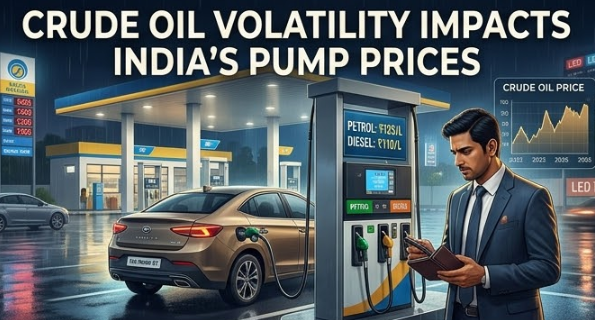
Every single morning, millions of vehicle owners across the country wake up with one common question on their minds: What is the petrol price today? Whether you are a daily office commuter riding a scooter, a fleet manager running dozens of trucks, or a family planning a long weekend road trip, the numbers flashing at the local fuel station directly impact your monthly budget.
The conversation around the petrol diesel price is a constant in Indian households. It is a topic discussed at tea stalls, in corporate boardrooms, and across social media. But understanding why the diesel petrol price fluctuates so wildly requires looking beyond the dispensing pump. The global oil market is a complex web of international relations, crude oil extraction rates, currency exchange values, and local taxation policies.
In this comprehensive 2026 guide, we are going to break down everything you need to know about the petrol and diesel price right now. We will look at live regional updates, the profound difference between retail and industrial rates, why certain states pay more, and how you can protect your wallet against the next inevitable fuel hike.
1. Understanding the Mechanics: Why Does the Price Change?
Before diving into the specific city-wise breakdowns, it is crucial to understand exactly what makes up the price of diesel and petrol. Many consumers are surprised to learn that the actual cost of the raw fuel makes up less than half of what they pay at the pump.
The Journey from Crude to Pump
The diesel price in india is not arbitrarily decided by the fuel station owner. It goes through a rigorous daily revision process known as dynamic fuel pricing. Here are the core components that dictate the india diesel price and petrol rates:
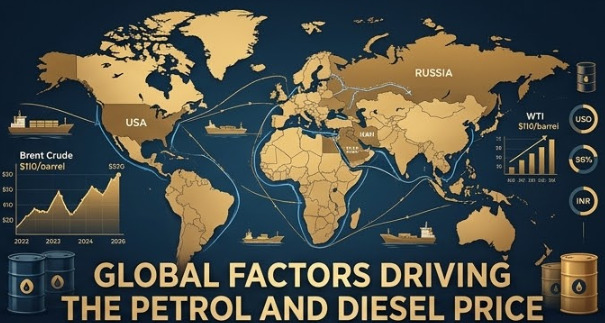
- Global Crude Oil Costs: India imports over 80% of its crude oil requirements. When global benchmarks like Brent Crude or West Texas Intermediate (WTI) go up due to geopolitical tensions or supply cuts by OPEC+ nations, the base cost of our fuel rises immediately.
- Currency Exchange Rate (INR to USD): Because international crude oil is traded in US Dollars, the strength of the Indian Rupee plays a massive role. If the Rupee weakens against the Dollar, the petrol diesel price today will increase, even if the international crude price stays exactly the same.
- Refinery Processing Charges: The raw crude must be transported, refined, and converted into usable petrol and industrial diesel. Oil Marketing Companies (OMCs) like Indian Oil, Bharat Petroleum, and Hindustan Petroleum add their refining margins and freight charges.
- Central Excise Duty: This is a fixed tax levied by the Central Government of India. It is a significant chunk of the final price.
- Dealer Commission: The petrol pump owners receive a commission per liter to cover their operational costs, staff salaries, and land rent.
- State Value Added Tax (VAT): This is where the massive regional differences come in. Every state government applies its own VAT on fuel. Because VAT is a percentage applied after all other costs and central taxes are added, it has a cascading effect, leading to vastly different prices across borders.
2. City and State-Wise Breakdown: Petrol and Diesel Price Today
Because of the varying state taxes mentioned above, the diesel rate you pay in one city might be drastically different just 50 kilometers away across a state border. Let’s take a closer look at the current landscape across key regions. (Note: Fuel prices are dynamic; the following analysis reflects the prevailing economic trends of 2026).
The Capital’s Fuel Economy
If we look at the diesel price delhi, it traditionally remains slightly lower than in other massive metropolitan areas like Mumbai. This is primarily because the Delhi government has historically kept its VAT structure relatively competitive to ease the burden on its massive daily commuter base.
Currently, the today diesel price delhi is being closely watched by logistics companies. Because Delhi is a major hub for goods entering North India from the western ports, the delhi diesel price today directly impacts the freight costs of essential commodities.
The Financial Capital’s Burden
Moving west, the diesel price mumbai is consistently among the highest in the country. Maharashtra levies some of the steepest VAT rates and additional cesses on fuel to fund vast infrastructure projects. For residents of Mumbai, navigating the heavy traffic while paying a premium today petrol price requires careful financial planning and a heavy reliance on local trains or carpooling.
The Northern Agricultural Belt
The diesel price punjab and the diesel price haryana are incredibly sensitive political and economic metrics. These states are the agricultural heartland of India.
- Punjab: The punjab diesel price today directly dictates the cost of farming. Tractors, harvesters, and irrigation pumps consume millions of liters of diesel during the sowing and harvesting seasons. Therefore, any diesel price increase here leads to immediate protests and an increase in the cost of wheat and rice across the country. Keeping an eye on the diesel price punjab today is essential for understanding food inflation.
- Haryana: Similarly, the diesel price in haryana affects both agriculture and the massive industrial and logistics hubs located in cities like Gurugram and Faridabad. The haryana diesel price today is a key metric for transport union profitability.
- Uttar Pradesh: As India’s most populous state, the diesel price up (and specifically the up diesel price today) impacts the daily lives of over 200 million people. The diesel price in up is crucial for the thousands of inter-city buses and freight trucks that traverse its massive highway network.
The Western Desert State
The diesel price jaipur and across Rajasthan frequently headlines the diesel price news. Rajasthan has historically struggled with high VAT rates, leading to situations where border-town residents drive into neighboring states like Haryana or Gujarat just to fill their tanks and save money on the diesel and petrol price today.
3. The Real-World Impact of a Petrol Diesel Price Hike
It is easy to look at the today petrol and diesel price as just numbers on a screen. But the reality is that a petrol diesel price hike has a profound, cascading effect on the entire economy.
Let’s put this into perspective. Over the weekend, millions of people were glued to their phones, eagerly checking the dhurandhar movie box office collection to see if the highly anticipated film broke any records. While entertainment is a great escape, the numbers that truly dictate our standard of living are the ones at the fuel pump.
When the diesel price hike occurs, it triggers a domino effect:
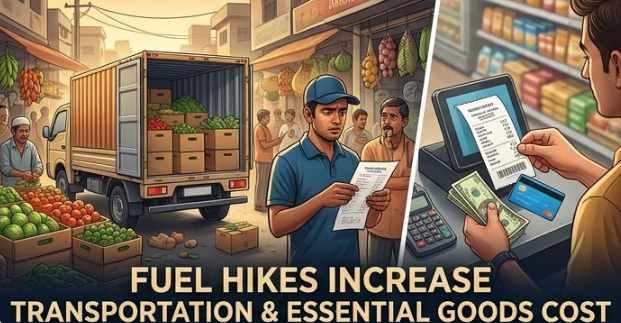
- Freight Costs Skyrocket: Every single item in your local supermarket—from fresh vegetables to packaged electronics—arrives via a diesel-powered truck. When the diesel today price goes up, transport companies immediately raise their freight charges.
- Groceries Become Expensive: The local vendor absorbs the transport cost for a few days, but eventually, they must pass it on to you, the consumer. The inflation of basic food items is directly tied to the today diesel petrol price.
- Public Transport Fares Rise: Cab aggregators (like Ola and Uber), auto-rickshaw unions, and private bus operators eventually revise their fare charts when they can no longer absorb the petrol diesel price today.
- Aviation and Rail: While trains use electricity and diesel, and planes use Aviation Turbine Fuel (ATF), the broader petrol and diesel price trends usually mirror the costs of all industrial fuels, making travel more expensive across the board.
Whenever you watch the petrol diesel price news, remember that a hike of just ₹2 per liter drains thousands of crores of rupees from the collective pockets of Indian consumers, reducing their spending power for other goods and services.
4. Retail vs. Industrial Diesel: Understanding the Divide
Most everyday drivers are only concerned with the retail diesel rate today. However, there is an entirely different market that operates behind the scenes: the industrial diesel market.
What is Industrial Diesel?
The industrial diesel price applies to bulk buyers. Think of massive manufacturing plants, shopping malls that require enormous backup generators, mining companies, and state transport corporations. These entities do not send trucks to a local petrol pump; they buy thousands of liters directly from the oil marketing companies.
Why is the Pricing Different?
Historically, the government provided subsidies, making bulk purchases cheaper. However, in recent years, dynamic pricing has changed the landscape. Currently, the industrial diesel price can sometimes be higher than the retail price of diesel.
Why? Because retail prices are often politically sensitive and sometimes held steady by the government during election seasons. Meanwhile, bulk industrial buyers are forced to pay the true, unshielded market rate based directly on international crude fluctuations.
When the diesel price news today reports a massive spike in global crude oil, the industrial sector feels the pain immediately. This increases the cost of manufacturing goods, which, again, leads to higher prices for the end consumer. Navigating the diesel price in india requires understanding both the retail pumps and the bulk industrial terminals.
5. Strategic Fuel Management: How to Fight the Diesel Price Increase
We cannot control the international oil markets, nor can we dictate state taxation policies. However, we can control our own consumption habits. With the today petrol diesel price constantly threatening to stretch our budgets, here are actionable, proven strategies to maximize your fuel efficiency and save money.
1. The Art of Smooth Driving
Aggressive driving is the enemy of fuel economy. Rapid acceleration, hard braking, and driving at inconsistent speeds can lower your gas mileage by roughly 15% to 30% at highway speeds and 10% to 40% in stop-and-go traffic. Treat your accelerator pedal like there is an egg underneath it. Smooth, gradual acceleration is the best defense against a high diesel petrol price today.
2. Maintain Optimal Tire Pressure
This is the most ignored aspect of vehicle maintenance. Under-inflated tires increase rolling resistance, meaning your engine has to work significantly harder (and burn more fuel) just to push the car forward. Checking your tire pressure every two weeks and keeping it at the manufacturer’s recommended level can improve your mileage by up to 3%. When the today diesel price is high, every drop counts.
3. Smart Air Conditioning Usage
In the blazing Indian summer, turning off the AC is not a realistic option. However, running the AC at maximum blast puts a heavy load on the engine. If you are driving at lower speeds within the city, occasionally rolling down the windows can help. On the highway, always use the AC; rolling down windows at high speeds creates aerodynamic drag, which burns more fuel than the air conditioner does!
4. Utilize Fuel Credit Cards
Many banks offer co-branded credit cards in partnership with Indian Oil, BPCL, or HPCL. These cards offer a surcharge waiver (usually 1%) and provide reward points specifically for fuel purchases, which can later be redeemed for free petrol. If you are a heavy commuter paying the daily petrol price, a good fuel credit card is a mandatory financial tool.
5. Plan Your Routes and Carpool
Idling in bumper-to-bumper traffic means you are getting zero kilometers per liter while still burning fuel. Use real-time GPS navigation apps to check for traffic jams before you leave the house. Furthermore, corporate carpooling has never been more relevant. Splitting the diesel and petrol price with three colleagues instantly cuts your commuting budget by 75%.
6. The Future of Fuel: Looking Beyond the Petrol Diesel Price Today
As we constantly monitor the petrol price today and the diesel rate, it is also vital to look at the horizon. The global automotive industry is undergoing a massive, historic shift.
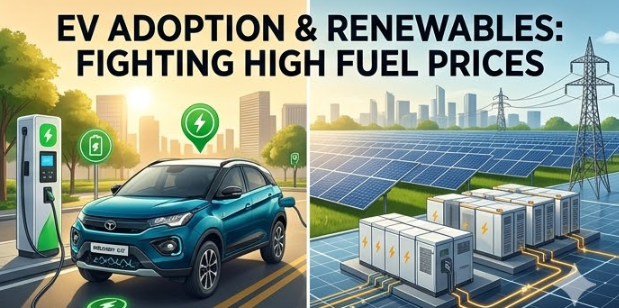
The relentless fluctuation of the diesel price in delhi and other major hubs is accelerating the adoption of alternative energy.
- Electric Vehicles (EVs): The EV revolution is no longer a futuristic concept; it is happening right now on Indian roads. As battery technology improves and charging infrastructure expands, more consumers are opting out of the petrol pump ecosystem entirely.
- Ethanol Blending: The Indian government is aggressively pushing for higher ethanol blending in petrol (aiming for 20% blending, known as E20). Ethanol is produced domestically from agricultural byproducts like sugarcane. Higher blending reduces our reliance on imported crude oil, which should theoretically help stabilize the today petrol price in the long run.
- CNG and Green Hydrogen: Compressed Natural Gas remains a cheaper alternative for city commuters and commercial vehicles, while heavy industries are heavily investing in Green Hydrogen research to eventually replace industrial diesel.
7. Conclusion: Staying Informed in a Volatile Market
The reality of the modern economy is that the petrol and diesel price today will continue to be volatile. It is influenced by wars fought on other continents, the decisions of foreign cartels, and the intricate tax balancing acts of local state governments.
Whether you are tracking the delhi diesel price today to manage a logistics fleet, or checking the punjab diesel price to calculate harvesting costs, staying informed is your best defense. Do not just look at the final number at the pump; understand the global trends driving it.
Make fuel efficiency a daily habit, utilize financial tools like reward cards, and keep an eye out for technological shifts like EVs and hybrids. While we all enjoy checking the latest entertainment news or the dhurandhar movie box office collection, taking an active, informed interest in the petrol diesel price news is what will truly safeguard your financial health in 2026 and beyond.