As it was twenty years ago and as it will be twenty years from now, Rakeysh Omprakash Mehra’s Rang De Basanti will remain as powerful, bold and revolutionary as it has always been. Released on January 26, 2006, the film truly woke up a generation. I wasn’t even six years old when it first hit theaters, but by the time I was 10, I knew it by heart. It seems that my most formative years were marked by it, as I grew up along with the film, returning to it unfailingly every Independence Day and Republic Day on television. But it wasn’t until I was 14 that I truly understood the weight of what Mehra was articulating through his cinema. And over time, as the sociopolitical landscape has changed dramatically, as the fabric of the nation has become increasingly fragile, the film, with each rewatch, seems to take on a new resonance and, moreover, a sharper urgency.
It is fitting, then, that Mehra, in an exclusive conversation with SCREEN, reflecting on the film’s legacy, commented that it will remain relevant until the end of civilization, because it is that type of movie. Among other things, he talks about the creative decisions that defined him, the immense difficulty in getting the project greenlit, his battles with the censors of the time and the burning question that torments everyone today: could Rang De Basanti be made in the present moment?

Excerpts edited for clarity and brevity.
I want to start with the opening credits that play over Sue’s (Alice Patten) research footage, sometimes interspersed with archival footage. Why such a choice?
The opening credits should immediately set the tone of the film and signal what is to come. In this case, the idea came from Sue McKinley’s discovery of the diary of her grandfather James (Steven Mackintosh), the officer who oversaw the capture and execution of Bhagat Singh, Sukhdev and Rajguru. That diary becomes the basis of the documentary he wants to make. Before arriving in India, Sue’s office is full of research: photographs, documents hanging on the wall. We chose to start there, but we experimented with the way we rolled. We use imported tilt shift lenses, which allow the focus to shift and tilt even in motion. This is why the images appear unstable, the focus constantly changes and the camera moves unusually close to the wall.
Tell me about Binod Pradhan’s camera work. The use of Dutch angles, unusual close-ups, distinctive lighting and even grainy textures at times. What was the thinking behind these choices?
We use Dutch angles only at critical moments, never for effect. For example, you’ll notice them when Sue starts imagining the kids as freedom fighters. It was a way to get into his mind. We also use the technique as a transition, moving from Sue or James’ voiceovers to the documentary layer and then back to the main narrative. As for Binod, I usually call him “Bingogh”: a mix of Binod and Van Gogh. I really think that if I was blind and he filmed my movies, they would look better because he wouldn’t interfere as much. During the readings I told him that I saw these characters as a single group, without main protagonists, nothing like that, just as a solid group. That idea defines our lens choices.
For the first third of the film, we largely stick with wider lenses, between 24 and 35mm. There may have been one or two exceptions, but otherwise it was a conscious decision. In the middle third, we switch to lenses between 50 and 70mm. And in the last third, we move almost entirely to portrait lenses, 75mm and above. The visual journey mirrors the emotional one: we begin with the group and then gradually isolate them as individuals, creating an increasing sense of claustrophobia. The audience is slowly drawn inward, forced to concentrate, to feel in control of the narrative. And then, in the last scene, we finally open up to the long shot of that final stretch, in front of mustard fields. You breathe. Until then, the film holds your breath.
Story continues below this ad.
So read | ‘Ikkis and Dhurandhar should coexist in a democracy’: Ikkis writers talk about taking on trolls and working with Dharmendra
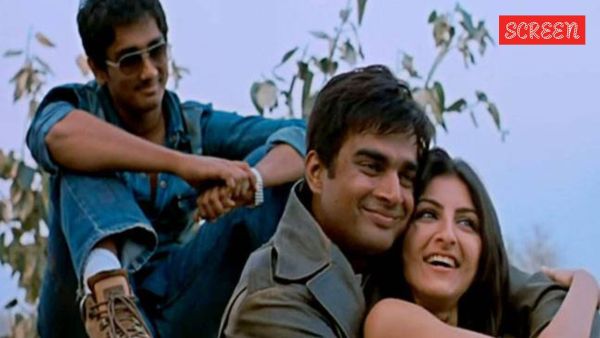 Rakeysh Omprakash Mehra reveals that Karan’s character, played by Siddharth, was in love with Sonia, played by Soha Ali Khan.
Between the two versions of Paathshaala, Karan (Siddharth) seems to change. In the first, he is a sloppy rich brat; In the second, he gets on the jeep to greet the Gateway of India. Was this where your internal transformation really begins?
Karan was, in many ways, the most author-supported character in the film, if there was one. He was also the furthest from the idea of India. He wanted to go to the United States, he was the son of a billionaire arms dealer, he had a fractured relationship with his father, no mother and only his friends to hold on to. When he begins to participate in the documentary, something inside him begins to change, he also begins to smile. So in that greeting there is also a smile, he feels lighter, he feels liberated. And that is what I wanted all the young people in the country to feel: to smile, to be happy. And the only way to be happy is when you do something substantial and not just talk about going to America.
One of the most intriguing moments for me is when Ajay (R Madhavan) proposes to Sonia (Soha Ali Khan). As everyone around them celebrates, the scene slows down to focus on Karan’s reactions. He is genuinely happy for them, but we sense his melancholy, he is melancholic and you can feel that he is hiding his true emotions.
Story continues below this ad.
Karan is in love with Sonia. She isn’t, he is, and she knows it. But it’s like you can love someone without defining your relationship. That’s why I’ve always felt that it’s extremely boring when we have to underline all the relationships.
Watch the Cult Comebacks episode on Delhi-6 here:
The film was anything but conventional and also challenged the establishment. What obstacles did you face when taking it off?
We were fighting for finances forever. Filming was only two months away, and my previous producers, one from the US and one from the UK, had to be legally removed from the film because they never acted. They never appeared. They never provided the money. I continued investing my own funds. Of course, that wasn’t enough; I’m not a rich guy. Eventually, we had to first mortgage our office and then our house in Pali Hill, just to keep pre-production going. But despite this, the original producers still failed to deliver. They kept saying, “Take that actor; why are you doing this? Choose a familiar face for this one.” I get it, but I hate any kind of interference in the collaboration because it ruins the movie. Not for any selfish reason, it’s because I believe there should be uniqueness in the vision.
There is one particular scene where Aamir Khan’s DJ character finally breaks down in front of Sue. You felt like you didn’t perform up to par because it was initially supposed to be filmed another day, but you changed plans at the last minute. What happened there?
Story continues below this ad.
Bit. We were supposed to shoot that scene on a Monday, and when Monday came, everyone reported and I saw Aamir. His eyes were all red. I felt like I was overprepared. I didn’t want him to enter the scene with so many tears in his eyes. My idea was that fear, frustration and sadness should all erupt naturally. So I told Aamir, “We are not going to shoot.” And he said, “You can’t do this. I’ve been preparing for this all last week, and now, if you touch me, my tears will follow.” I said, “That’s what I’m trying to tell you.” So we didn’t film it. He was in a bad mood for a while, but he’s very calm in those situations and I love him. We continued filming all week and then on Thursday I said, “We’ll shoot that scene now.” He said, “You can’t do it.” I said, “Let’s try it.” And in a single shot we achieved it. I’m sure if we had shot it on Monday, it could have been a better scene, as Aamir himself has been saying. But at that time, my job was to direct and I did what I thought was right for the film. These are all the fun and cool things that happen on the set of a movie.
So read | Dhurandhar pushes an intolerant view, inciting the audience to accept it as entertainment.
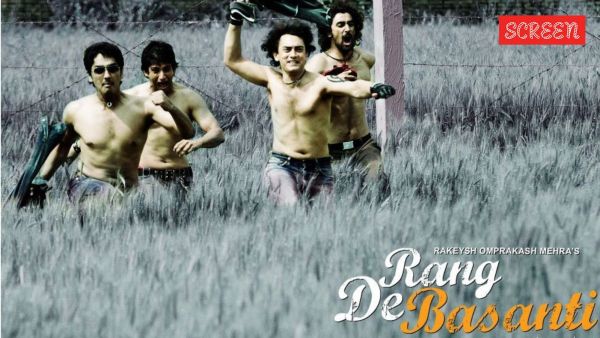 Rakeysh Omprakash Mehra spoke about how Rang De Basanti’s release date was delayed by a week due to hurdles amid a dispute with the censor board.
Since its release, the ending has always been a point of contention, and even now people remain divided on the matter. But were you sure it should end like this?
Yes, absolutely. I always knew that was what I wanted. But right before the release of the film, when we had edited the final version, it was supposed to be released in January, and it was the end of December when we were finishing the background music and putting the finishing touches on it, I still felt like something was missing. I guess it was the morning of the 26th or 27th when I woke up and told Bharathi (the editor) what was missing. The thing was, these guys had lit the fire, but it hadn’t spread. So I called Radhika Roy of NDTV and told her I needed her help. I told him I wanted to photograph all over India in the next three days with his equipment and cameras. That same day I flew to Bengaluru and filmed in the engineering college with the kids there. From there I took a flight to Calcutta, Jaipur, my assistants went to Srinagar, Indore, Delhi and back to Bombay. We covered 7-8 cities in two and a half days, and that’s when we finished the film. I remember Aamir was getting married in Panchgani at the same time and he told me, “Don’t come to my wedding, finish your film.”
Story continues below this ad.
Many people today still wonder if a film like Rang De Basanti could exist in times like these.
It’s a stupid question. If you want to do something, do it. It’s a choice. If your heart is in the right place, your intentions are pure, and you’re dying to tell a story, then you have to tell it. There is no such thing as “in these times.” While the film was relevant 20 years ago, it will be relevant 200 years later.
I ask this because I feel like what people mean when they say it can’t be done today is that many filmmakers struggle to get those anti-establishment political narratives off the ground. A large portion of people believe that even if RDB were made now, it would never see the light of day, it would not be published because it would not pass censorship.
Look, this is all assumptions and conjecture. You have to do it to find out. Even when we created RDB back then, the Defense Ministry bureaucrats told us: “Don’t call a MiG a MiG, don’t call a Defense Minister a Minister of Defense, you won’t get a Certificate of Censorship. You have to remove the scene on TV where the Defense Minister says: ‘The soldiers are not of sound mind, but they have a lot of spirit while flying the planes’. You can’t do all this.” I said, “This is all from real life. I have facts to back it all up.” They said, “Your film will be released on January 19. The film will take six weeks to go through the process and you will suffer.” I said, “Take six years, not six weeks. We’ll release it after six years, okay.” These are facts. When we stood our ground, he approached the Minister of Defense and flew past. Originally, it was supposed to release on January 19, but it was released on the 26th. What happens, happens for the better, we have a Republic Day release.